
There are seven lawful counter-drone measures available in the United States, and they range from ones any organization can deploy this month to ones reserved for a few hundred certified government agencies. Ranked from most accessible to most restricted: detection and monitoring, documentation and pattern records, law enforcement and FAA coordination, civil legal remedies, petitioned flight restrictions, certified detection operations, and certified mitigation. Everything else people ask about, jammers, firearms, net guns in the parking lot, sits on the wrong side of federal law regardless of how the drone overhead is behaving.
This guide ranks each lawful measure by who can use it, what it actually delivers, and where its limits sit, so a security leader can see the full menu at once instead of discovering it one vendor pitch at a time. It is part of our complete counter-UAS guide series, and the ordering is deliberate: each measure on this list is built on the ones ranked above it.
1. Detection and Monitoring: Open to Everyone, Foundation for Everything
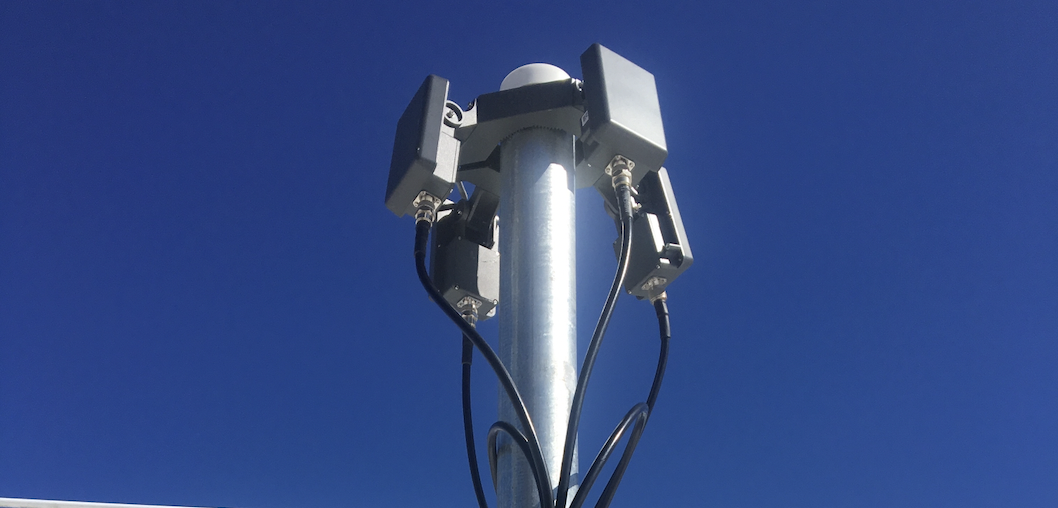
Who can use it: any organization, no license, no certification. What it delivers: continuous awareness of what is flying over your facility, which aircraft, how often, from where, and, with radio frequency sensors, often the location of the pilot. Passive detection is explicitly lawful because listening sensors emit nothing and read no communications content, a line the joint federal advisory on detection technology draws clearly. The limit: detection informs, it does not stop. But every measure below this one runs on what detection produces, which is why it ranks first rather than last. Our drone detection technology guide covers the sensor options.
2. Documentation and Pattern Records: The Measure That Multiplies the Others
Who can use it: everyone running measure 1. What it delivers: the evidentiary record, flight paths, timestamps, repeat aircraft, incursion patterns, that converts a complaint into a case. A facility that can show 47 documented incursions clustered between 1 and 4 a.m. has a budget argument, a prosecution exhibit, a grant application, and a petition foundation. A facility with anecdotes has none of those. The limit: records require a monitoring program with retention and review, not just an alarm, which is a design decision made before installation, not after an incident.
3. Law Enforcement and FAA Coordination: Borrowing Authority You Do Not Have
Who can use it: everyone. What it delivers: enforcement. Reckless operation, flights over people, and airspace violations are FAA enforcement matters and often state crimes, and a dispatch toward a located pilot is an intervention no private measure can match. The quality of this measure depends entirely on measures 1 and 2: police responding to a documented track with pilot coordinates act; police responding to somebody saw a drone take a report. The limit: response times and priorities are not yours to control, which is exactly why the record matters, cases proceed on evidence even when the response was slow.
4. Civil Legal Remedies: State Law Reaches Where Federal Law Defers
Who can use it: property owners and facilities. What it delivers: consequences for the operator. More than 17 states now have drone-specific privacy or trespass statutes, Virginia makes flying within 50 feet of a dwelling after warning a misdemeanor, California's civil code puts treble damages on drone surveillance of private activity, and general nuisance, harassment, and peeping statutes apply in most states. The limit: you need the operator's identity, which loops back to measure 1's pilot location, and remedies punish rather than prevent. The full landscape is in our guide to drone laws over private property.
5. Petitioned Flight Restrictions: Drawing a Federal Line Over Your Facility
Who can use it: critical infrastructure facilities, once the FAA's Section 2209 rule is final. What it delivers: a legally enforceable no-fly zone: an estimated 125,000 facilities become eligible to petition, and a granted restriction turns any overflight into a violation before the drone does anything else wrong. The limit: petitions are won on demonstrated vulnerability, which means documented incursions, measure 2 again, and a restriction is a line on a map that deliberate operators will ignore, which is why the FAA pairs the concept with detection rather than replacing it. Details in our no-drone-zone rule guide.
6. Certified Detection Operations: Tier 1 Under the New Federal Framework
Who can use it: state, local, Tribal, and territorial law enforcement and correctional agencies, via online certification through the FBI's National Counter-UAS Training Center. What it delivers: formalized detection-and-warning authority under the federal rule effective July 1, 2026, with roughly 1,500 agencies expected to certify within two years. Certification places an agency inside the federal coordination structure and is the prerequisite tier for anything further. The limit: Tier 1 personnel may not take any mitigation action, even in an emergency, and only the agency's own certified officers, never contractors, may exercise the authority.
7. Certified Mitigation: The Smallest Room in the Building
Who can use it: the four federal departments (Defense, Energy, Justice, Homeland Security) and Tier 2 certified agencies, expected to number only around 150, after mandatory in-person training. What it delivers: the authority to disrupt, seize, or take control of a drone posing a credible threat, using only equipment on the federal Authorized Technologies and Systems Lists, with FCC authorization required for radio-emitting systems and reporting obligations on every action. The limit: beyond the tiny eligible population, the authority itself is conditional: every action requires a credible-threat determination built from detection evidence, and the statute sunsets December 31, 2031 unless Congress extends it. The certification path is in our drone mitigation guide.
The Measures That Are Not on the List
Jamming a drone, even with a purpose-built device, even on your own land, even against a drone breaking the rules, carries FCC penalties up to $112,500 per act, and anti-drone guns sold online do not change that math. Shooting a drone is destroying an aircraft under federal law, with penalties up to 20 years, and the people who try it end up in more trouble than the pilot every time. Spoofing, net guns, and takeover tools all sit behind the same wall. The pattern is absolute: outside the certified framework, no self-help measure against the aircraft itself is lawful, and every effective response routes through the seven measures above.
Which Measures Matter Most for Your Facility
The ranking is universal; the emphasis is not. Correctional facilities live on measures 1 through 3, because the contraband mission is won by locating pilots and feeding prosecutions, and their agencies are first in line for measure 6 certification. Airports weight measures 1 and 3, detection fused into operational decisions and a rehearsed law enforcement handoff, since restricted airspace already exists overhead. Stadiums and event venues lean on 1, 3, and temporary flight restrictions during events. Energy plants, refineries, and utilities are the core audience for measure 5, the Section 2209 petition, and the documented record it demands. And police departments themselves are the one audience for whom measures 6 and 7 are live decisions this year, with certification timelines that reward starting now. In every case the entry point is identical: measure 1, scaled to the site, with the record accumulating from day one.
Read the Ranking as a Roadmap
The seven measures are not a menu to choose one from. They are a sequence: detection produces the record, the record powers the coordination, the remedies, the petitions, and the grant applications, and, for eligible agencies, the certifications sit on top of all of it. Organizations that start at measure 1 find every other measure getting stronger. Organizations that start by shopping for measure 7, or for the unlawful measures behind it, usually end up with neither authority nor evidence.
We believe the most underrated fact in this category is how much lawful power sits in the first three measures, available to everyone, deployable this quarter, and funded for public agencies through the FEMA Counter-UAS Grant Program with no local match. The complete picture of how the measures fit into a working system is in our guide to what a complete C-UAS stack includes.
Want to know which measures your facility can deploy this quarter, and in what order? Talk to our team about a site survey and program roadmap.
Related reading: