
Higher Education & Campus Security
University Drone Detection
A university is one of the hardest places to secure: an open, public campus with tens of thousands of students and staff, residential housing, sensitive research, and a calendar full of high-profile events. AirGuard gives campus safety teams real-time visibility of every drone and its pilot — protecting the people, privacy, and research that define your institution.
Trusted by leading universities
The Campus Challenge
An Open Campus Is Hard to Secure
Universities are built to be open and welcoming — sprawling grounds anyone can walk onto, a dense population that lives as well as learns there, and world-class research worth protecting. That openness is exactly what makes the airspace above a campus so difficult to control, and traditional ground security was never designed to see it.
Of students worry about their safety
More than 82% of college students report concern about their personal safety on campus — and a camera-equipped drone hovering over a dorm window or quad turns that anxiety into a direct threat.
Source: ADT & Clery Center campus safety research
A drone caught spying on dorms
In a 2024–2025 case, a man was arrested on felony voyeurism charges after a drone was used to film into university women's dormitories — exactly the kind of intrusion campus airspace monitoring is built to catch.
Source: Campus Safety Magazine
Drones in one 3-month detection window
In a single three-month period, AirSight's technology detected more than 12,580 drones at a monitored site — a measure of just how crowded the airspace over any large, open campus really is.
Source: AirSight (GSX 2024)
What We Protect
Drone Detection Across the Whole Campus
From residence halls to research labs, AirGuard secures the airspace over every part of university life. (For game-day protection of your athletic venues, see our Spectator Sports solution.)
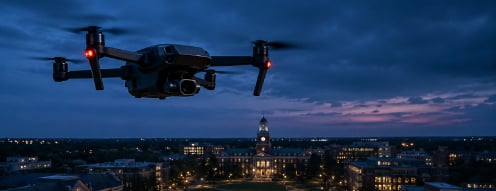
Campus Safety & Student Protection
Camera-equipped drones can stalk, harass, or spy on students and staff anywhere on an open campus. AirGuard alerts security the moment an unauthorized drone enters a monitored area and locates the operator, so a safety concern can be acted on instead of ignored.
Drones, surveillance & privacy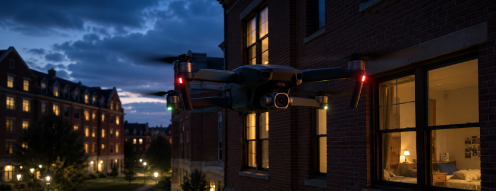
Residential & Dorm Privacy
Residence halls are where students live, sleep, and expect privacy — and a drone hovering at a dorm window is a serious violation. Detection lets campus security identify voyeuristic or intrusive flights near housing and respond before a student is harmed.
Why campuses need drone security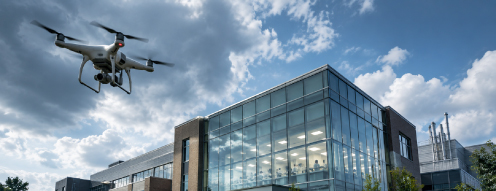
Research, Labs & Intellectual Property
Universities run grant-funded, often classified or proprietary research that is a target for espionage. Drones can photograph facilities, surveil sensitive sites, and exfiltrate visual intelligence. AirGuard protects the airspace over research buildings and IP-critical zones.
The hacking capabilities of drones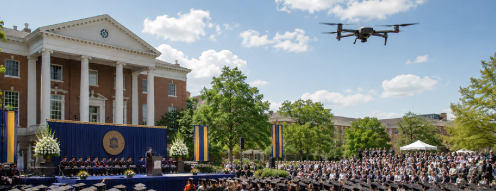
Commencement, Concerts & Dignitary Visits
Graduations, concerts, and visiting speakers or officials gather huge crowds and raise the threat profile. AirGuard delivers real-time airspace awareness for these high-profile campus events, integrating with the unified command your security team stands up.
Protecting VIPs & high-profile guestsHow AirGuard Works
From Blind Spot to Real-Time Awareness
AirGuard layers multiple sensor technologies into one platform, replacing the old "boots on the ground, eyes on the sky" approach with continuous, automated airspace intelligence across the campus.
Detect & Classify
Remote ID, RF, radar, and camera layers identify and classify every drone over campus — including "dark" drones that broadcast no signal — with make, model, speed, and altitude.
Locate the Pilot
RF direction finding pinpoints the operator's location. Instead of dispatching officers to chase a drone by line of sight, campus police go straight to the pilot.
Define Campus Zones
Set custom alert zones around dorms, labs, event venues, and the perimeter, so the right people are notified the moment a drone enters a sensitive area.
Integrate & Verify
Feed alerts into your campus police dispatch and Emergency Operations Center, backed by a 24/7 monitoring team that verifies every detection so staff act only on real threats.
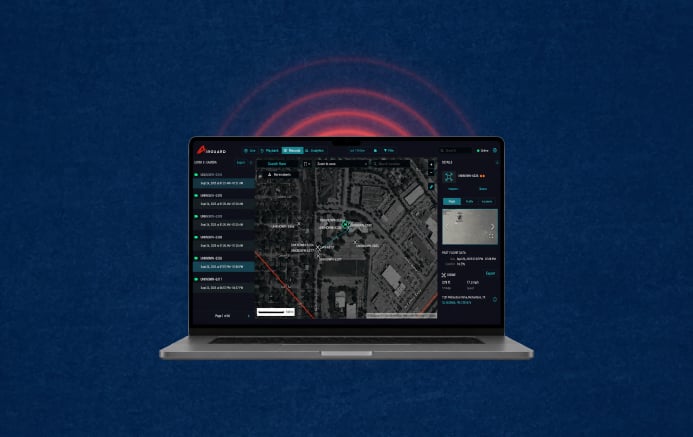
Built for Campus Security
Intelligence Your Campus Police & EOC Can Act On
AirGuard goes beyond detection, fusing multiple sensors and live monitoring into one platform — and integrating with the campus police, dispatch, and Emergency Operations Center systems your institution already runs.
Drone & Pilot Location
Pinpoint the GPS and Wi-Fi coordinates of both the drone and its operator for rapid situational awareness.
Custom Campus Alert Zones
Geofence dorms, labs, event venues, and the perimeter with their own notification rules and escalation paths.
EOC & Dispatch Integration
Open architecture connects with your Emergency Operations Center, campus police dispatch, and existing video and access-control systems.
Make, Model & Payload
Identify drone types and assess payload capability to gauge the risk a given aircraft poses to students and staff.
Evidence & Trend Analysis
Log flight history as digital evidence and analyze activity trends over time to spot repeat offenders and recurring hotspots.
24/7 Human Monitoring
A live team verifies every alert and filters false alarms, extending the reach of campus security without adding headcount.
Plan Your Program
Campus Drone Security Resources
Building a campus airspace program starts with assessing your risk and setting clear, transparent policy. These guides from the AirSight Knowledge Hub help your security team plan a response that protects the community without overreaching.
Drone Risk Assessment Guide
A framework to help your team assess the drone threats facing your campus and determine the appropriate response.
Read the guideUAS Policy Templates
Downloadable drone-policy templates and checklists — built for universities — to help you set clear, transparent rules for campus airspace.
Get the templatesThe AirGuard Platform
See how AirGuard detects drones, locates pilots, and integrates with the systems your campus security team already runs.
Explore AirGuardQuestions, Answered
University Drone Detection: FAQ
Common questions from campus security leaders and university administrators.
Universities are open, publicly accessible campuses with dense student and staff populations, residential housing, sensitive research, and frequent large events — a combination that makes the airspace above them hard to control. With more than 800,000 drones registered in the U.S., unauthorized flights near dorms, labs, and gatherings are a real and growing concern. Drone detection gives campus security continuous visibility of what is flying overhead and where the operator is, so they can respond before an incident occurs rather than react after the fact.
AirGuard detects drones approaching residential buildings and lets campus security define custom alert zones around housing. When a camera-equipped drone enters a monitored area near a dorm, the system flags it in real time and locates the operator, so security can intervene against voyeuristic or harassing flights. Importantly, AirGuard is a detection tool focused on unauthorized aircraft and their pilots — it supports a transparent campus drone policy rather than monitoring students themselves.
Yes. Universities conduct grant-funded, proprietary, and sometimes export-controlled research that is a genuine target for espionage. A drone can photograph research facilities, surveil sensitive sites, and gather visual intelligence without ever touching the ground. AirGuard protects the airspace over research buildings and IP-critical zones, alerting security to unauthorized drones and identifying their operators so the institution can protect its work and its funding.
AirGuard protects the whole campus, including athletic venues. Because college stadiums draw crowds that rival professional sports and face the same game-day airspace threats, we cover them in detail on our dedicated Spectator Sports solution. The same AirGuard platform can secure your everyday campus and scale up for game days, commencement, and other major events, with alert zones and detection layers tailored to each.
AirGuard is built on an open architecture, so it integrates with the systems your institution already runs — campus police dispatch, your Emergency Operations Center, and existing video and access-control platforms. Alerts and pilot locations can be shared in real time across a unified command structure, which is especially valuable during major events when local, state, and federal partners coordinate with campus security. This turns drone detection into part of your existing response workflow rather than a standalone tool.
For a university, no — jamming, disabling, or downing a drone is federally restricted to certain authorized agencies. That is why AirGuard focuses on detection, tracking, pilot location, and documentation, all of which are lawful and give your campus security team and their law-enforcement partners the intelligence to respond appropriately. Recent federal legislation has begun expanding counter-drone authority for state and local agencies, which campus police partner with during incidents and major events.
Protect Your Campus from the Air
See how AirGuard gives your campus safety team real-time drone and pilot intelligence across students, housing, research, and events. Book a demo or take our airspace detection solution for a spin.