Shortlisting counter-UAS solutions comes down to five gates applied in order: mission fit, legal posture, system completeness, operational proof, and five-year commercial terms. Each gate removes vendors for reasons that have nothing to do with how good their demo looked, and a long list of a dozen names typically leaves two or three standing by the end. The method matters because the counter-UAS market mixes detection specialists, mitigation manufacturers, defense integrators, and repackaged consumer hardware under one label, and a buyer who evaluates them on the same spreadsheet ends up comparing products that do not do the same job.
This guide is the shortlisting method, not a vendor list. It is written for the security director, procurement lead, or agency program manager who has a long list and a budget cycle, and it is the buying-stage companion to our complete counter-UAS guide. For the names on the market and how they group, see our separate counter-drone vendor landscape; this page is about how to cut that list.
Gate 1: Mission Fit, or Which Kind of Vendor You Are Actually Buying
Counter-UAS vendors fall into distinct categories, and the first cut is recognizing which one your mission needs. Detection specialists build the sensing, tracking, and identification layer, which is the lawful mission for every private organization and the foundation for every public one. Mitigation manufacturers sell the jamming, takeover, and capture layer, which only certified agencies may operate. Defense integrators assemble both at a scale and price built for military installations. And a growing set of resellers package imported consumer-grade hardware with a security label attached. A correctional facility, an airport, or a utility shopping for a detection program should not be evaluating mitigation manufacturers at all, and a police department pursuing certification should be evaluating detection first, because mitigation authority runs on detection evidence. Sorting the long list by category before anything else usually removes a third of it.
Gate 2: Legal Posture, or Whether the Solution Is Lawful to Operate at All
Three legal questions eliminate vendors quickly. First, does any part of the system emit radio energy or interfere with a drone's link? If so, it is not lawful for private operation and, for agencies, requires the FCC authorization and Authorized List status the federal rule now mandates. Second, does the detection method read the content of drone communications, or only their external characteristics? The joint federal advisory warns that content interception can implicate federal surveillance statutes, so a vendor that cannot answer this in writing is a vendor that has not thought about it. Third, for public agencies, is the specific system on the federal Authorized Technologies and Systems Lists? Certification is meaningless if the equipment you buy is not eligible to be used under it.
Gate 3: Completeness, or Whether It Is a System or a Sensor
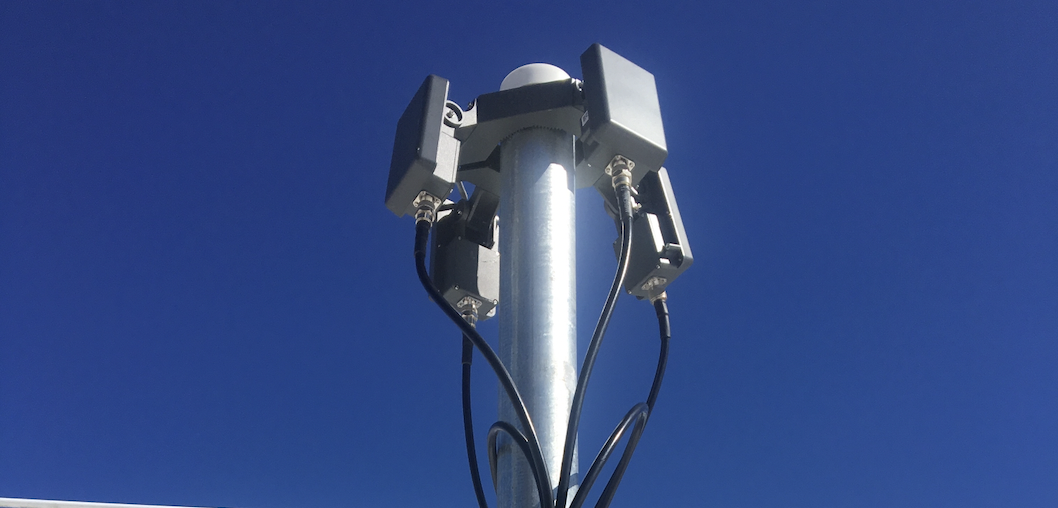
A complete counter-UAS system has four layers: sensors, fusion, response workflow, and records. Most vendors sell the first layer convincingly and the fourth layer not at all. The test is concrete: in the demo, ask to see one drone tracked by two sensor types displayed as one target rather than two alarms, ask who receives an alert at 3 a.m. and on what device, and ask for an exported incident report on the spot. A vendor whose answer to any of these involves the word roadmap is selling a partial system at a complete-system price. Also ask what happens against a drone that transmits nothing, because an RF-only offering has no answer for the autonomous and fiber-optic aircraft that make up a growing share of the threat, and our drone detection technology guide explains why radar is the only layer that sees them.
Gate 4: Operational Proof, or Evidence It Works at a Site Like Yours
Vendor demonstrations are performed in favorable radio environments against the vendor's own drones. None of that predicts performance at your facility, in your terrain, with your neighbors' Wi-Fi. Three forms of proof survive that gap. Reference customers in your vertical, a prison for a prison, an airport for an airport, who will discuss false-alarm rates and support responsiveness eighteen months after installation, not eight days. A site survey before the quote, because a vendor that prices without surveying is guessing at coverage. And a trial or demonstration on your own airspace, against drones you choose, with the results, detections, misses, and false alarms, documented. The FEMA grant program's performance measures, 90 percent classification accuracy and investigations on every violation, are a useful benchmark to hold vendors to even when no grant is involved.
Gate 5: Five-Year Commercial Terms, Not Purchase Price
The last gate is the one procurement usually applies first, which is why it belongs last. Compare vendors only on a five-year total: hardware, installation, integration, calibration, training, software licensing, support, and maintenance in one number, because the non-hardware items typically add 30 to 60 percent and vendors distribute them differently across the quote. Then ask the questions that reveal what the five years will actually be like: what the support model is and where the support engineers sit, how often the detection library and software are updated, whether the platform is open to other sensors and existing security systems, and what the vendor's own stability looks like, since a counter-UAS platform is a decade-long relationship and the market has seen consolidation. Two vendors that look identical at purchase price routinely separate by 40 percent at five years.
Instant Disqualifiers
Some findings end the conversation regardless of gate:
-
Jamming or takedown marketed to a private buyer. The vendor is either unaware of federal law or indifferent to your exposure. Either way, the penalties land on you.
-
A quote with no site survey behind it. Coverage claims without terrain and RF-environment data are marketing, not engineering.
-
No reference in your vertical. A first deployment at a facility like yours makes you the reference, at your cost.
-
Inability to export an incident report in the demo. The records layer is not optional for prosecutions, petitions, grants, or certified agencies.
-
Vagueness on content interception. If the vendor cannot state in writing which side of the surveillance-law line the system sits on, assume the wrong side.
Six Questions to Get in Writing Before the Shortlist Is Final
-
Which of your components emit radio energy, and what authorization does each require to operate?
-
Does the system decode the content of drone communications, or only detect and locate their signals?
-
Which of installation, integration, calibration, training, licensing, support, and maintenance are included in this quote, and at what price for years two through five?
-
Name two customers in our vertical we may call, with deployments older than one year.
-
What is your documented false-alarm rate at a deployment comparable to ours, and how is it measured?
-
What happens, specifically, when this system detects a drone at 3 a.m. at our facility?
A Short List Is a Confident List
Run in order, the five gates do more than cut names. They force the buyer to define the mission before hearing pitches, to settle the legal question before it becomes a liability, and to price the program before falling for a demo. The two or three vendors left standing are the ones worth a formal requirements process, and the buyer walks into that process knowing exactly why each one is there.
We publish this method knowing we will be evaluated by it, and we would rather compete inside a rigorous shortlist than win a careless one, because careless purchases in this category become the unread-alert stories that set the whole industry back. The end-to-end picture of what the shortlisted system will actually do is in our guide to how anti-drone systems work, and the practical walkthrough is in our complete guide to detecting drones.
Ready to put us through the five gates? Book a site survey and we will answer all six questions in writing.
Related reading: