In February 2026, Customs and Border Protection officials used a Department of Defense anti-drone laser weapon near El Paso, Texas to target what they believed was a drone crossing the border from Mexico. The FAA shut down El Paso International Airport and the surrounding airspace out of concern the weapon could threaten air traffic. The targeted object turned out to be a party balloon. The incident captures the fundamental challenge of anti-drone weapons: they are powerful tools that can cause significant collateral damage when deployed without reliable detection and identification. The weapon worked. The intelligence feeding it did not.
The counter-drone weapons market is advancing rapidly. Israel's Iron Beam laser system achieved its first confirmed combat intercepts in early 2026 at roughly $2 per shot. Fortem Technologies delivered its next-generation DroneHunter 5.0 net-capture interceptor and won a contract for FIFA World Cup venue protection. The U.S. Army is launching a 2026 competition for an enduring high-energy laser weapon focused on counter-drone defense. This guide covers every category of anti-drone weapon in use today, explains who can legally deploy each type, and identifies the one capability that every weapon depends on to function.
RF Jammers: Disrupting the Drone's Control Link
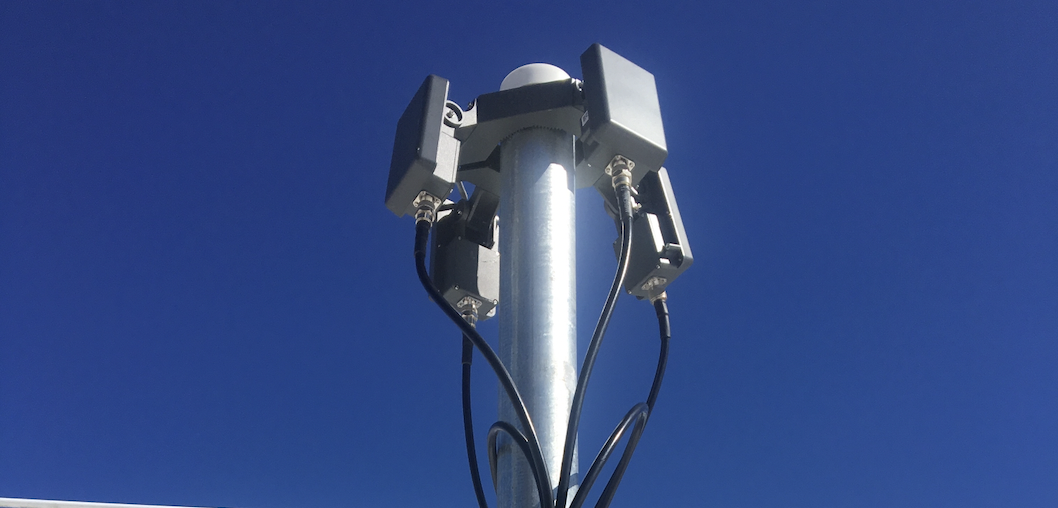
RF jammers are the most common anti-drone weapon deployed by law enforcement and security agencies. They work by broadcasting radio frequency energy on the same frequencies the drone uses to communicate with its controller (typically 2.4 GHz and 5.8 GHz). This overpowers the legitimate control signal, severing the link between the drone and its operator. When the link is broken, most commercial drones are programmed to either return to their launch point, hover in place, or descend and land.
Advantages: Non-kinetic (no debris risk from a falling drone), reusable with no ammunition cost per engagement, and effective against the vast majority of commercial drones. Handheld systems like the DroneGun MKill weigh under 15 pounds and can be deployed by a single operator. For a detailed breakdown of how drone jammers work and who can legally use them, read our full guide.
Limitations: Jammers are indiscriminate. They broadcast interference across frequency bands, which can disrupt Wi-Fi networks, Bluetooth devices, cellular communications, and GPS signals in the surrounding area. The El Paso airport closure demonstrates what happens when jamming occurs near aviation infrastructure. Jammers also cannot defeat autonomous drones flying pre-programmed GPS waypoints without an active control link, since there is no signal to disrupt.
Legal status: The FCC prohibits the sale, marketing, and use of signal jammers by private parties in the United States. Under the SAFER SKIES Act, certified state and local law enforcement may deploy jammers from the federally authorized technology list after completing FBI NCUTC training. Federal agencies (DHS, DOJ, DOD) retain existing jamming authority.
Cost: Handheld RF jammers range from $10,000 to $30,000. Vehicle-mounted directional systems cost $50,000 to $150,000. Enterprise jamming platforms integrated with detection systems can exceed $200,000.
Cyber-Takeover Systems: Seizing Control of the Drone
Cyber-takeover (also called protocol-level spoofing) is a more sophisticated approach than jamming. Instead of simply disrupting the control link, these systems exploit the drone's communication protocols to seize control from the original operator and command the drone to land at a designated safe location. The advantage over jamming is precision: the drone lands where you want it, not where its return-to-home programming sends it.
-
D-Fend Solutions EnforceAir: Detects hostile drones via RF, then exploits their communication protocols to take control and initiate a safe landing. One of the most technically sophisticated mitigation approaches on the market.
-
Sentrycs CoRF: Communicates directly with the drone in its own protocol language to sever the link with the original operator. Systems range from a $65,000 handheld unit to $250,000-$400,000 long-range platforms. Recently won a contract for 2026 FIFA World Cup venue protection.
Limitations: Cyber-takeover requires knowledge of the drone's communication protocol. These systems maintain libraries of known protocols (primarily DJI, Autel, Parrot), but custom-built or heavily modified drones using non-standard protocols may be immune. The systems are also significantly more expensive than jammers.
Net-Capture Interceptors: Physical Drone-on-Drone Engagement
Net-capture systems deploy a drone that physically catches the target drone in a net. This is the only mitigation method that works regardless of the drone's communication protocol, frequency, or autonomous capability. If it flies, a net can catch it.
Fortem Technologies DroneHunter: An autonomous interceptor drone equipped with a net and onboard radar. The DroneHunter identifies the target, calculates an intercept trajectory, deploys the net, and tows the captured drone to a safe location. Fortem claims 4,700 safe takedowns. The DroneHunter 5.0, delivered in January 2026, features dual cameras and enhanced autonomous engagement capability. Selected for the Pentagon's Replicator-2 initiative and awarded a contract for FIFA World Cup venue protection.
Advantages: Protocol-agnostic (works against any drone regardless of signal type), preserves the drone intact for forensic analysis, and does not create electromagnetic interference. The captured drone can be examined for payload contents, flight logs, and operator identification.
Limitations: Engagement range is limited by the interceptor drone's flight capabilities. Each engagement requires deploying and recovering an interceptor. In a multi-drone scenario, the system must have enough interceptors pre-positioned to handle simultaneous targets. Costs range from $50,000 to $200,000+ per system depending on configuration.
Directed Energy: Lasers and High-Powered Microwaves
Directed energy weapons use focused electromagnetic energy to disable or destroy drones. Two types are entering operational service:
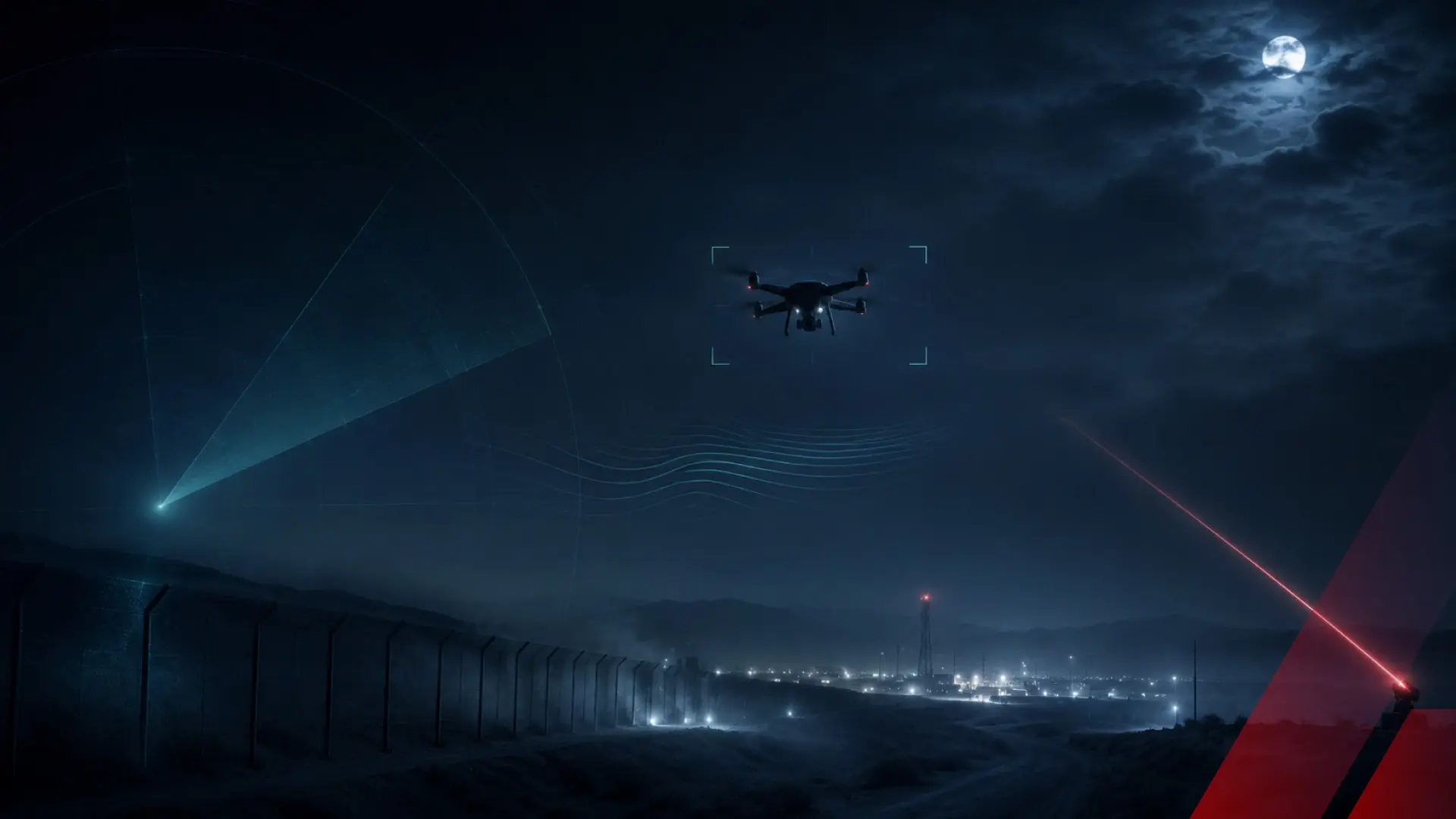
High-energy lasers (HEL) focus a concentrated beam of light on the drone's structure, burning through the airframe or disabling critical components like motors, batteries, or flight controllers. The U.S. Army has deployed four Directed Energy M-SHORAD Stryker vehicles with 50-kilowatt laser systems to the Central Command area of operations. Israel's Iron Beam, developed by Rafael Advanced Defense Systems, achieved its first combat intercepts in 2026 at an estimated cost of $2 to $5 per shot. AeroVironment unveiled the LOCUST X3, a 20-30 kW laser system designed for counter-UAS missions.
High-powered microwaves (HPM) disable drone electronics across a wide beam, making them particularly effective against drone swarms where multiple targets must be defeated simultaneously. The Pentagon is accelerating microwave weapon development with a goal of fielding operational capabilities within 36 months.
Advantages: Near-zero cost per engagement (limited only by electrical power), unlimited magazine depth, and speed-of-light engagement that eliminates lead-time calculations. For sustained defense against high-volume drone attacks, directed energy is the only economically viable solution.
Limitations: Current systems are large, power-hungry, and expensive to procure ($5M to $50M+). They struggle in fog, rain, and dust. Reliability and maintainability in field conditions remain challenges. The El Paso incident also demonstrates the risk of collateral effects on aviation and communications infrastructure. Directed energy weapons are currently limited to military applications and are not available to state or local agencies.
Kinetic Systems: Munitions and Projectiles
Traditional kinetic approaches use ammunition, missiles, or projectiles to physically destroy drones. This includes everything from shotgun-based solutions to purpose-built counter-UAS missiles like Saab's Nimbrix and Raytheon's Coyote interceptor.
Advantages: Proven technology with established manufacturing and supply chains. Effective against all drone types regardless of electronics or protocol.
Limitations: Debris risk is the primary concern. A drone destroyed at altitude drops uncontrolled wreckage. In urban, stadium, or airport environments, falling debris creates liability and safety risks. Kinetic systems are overwhelmingly used in military contexts where collateral damage is manageable. They are not practical for civilian law enforcement or facility security applications in populated areas.
The Rule Every Anti-Drone Weapon Obeys
Every anti-drone weapon depends entirely on upstream detection. A jammer that does not know where to point is broadcasting interference into empty sky. A net-capture drone without a target track has no intercept trajectory. A laser without a detection cue has nothing to aim at. The El Paso incident did not fail because the laser malfunctioned. It failed because the detection and identification upstream classified a party balloon as a hostile drone.
This is why we consistently advise organizations to invest in detection before mitigation. A multi-sensor detection system that reliably detects, tracks, and identifies drones, distinguishing actual threats from authorized aircraft, wildlife, and debris, is the prerequisite for any mitigation capability to function safely and effectively. For a framework on building detection capability by facility type and threat level, read our anti-drone systems protection tier guide.
The SAFER SKIES Act reflects this principle. Agencies pursuing mitigation authority must first demonstrate detection and identification capability. The FBI's training curriculum at the NCUTC emphasizes that operators must establish a "credible threat" determination before exercising mitigation authority. That determination starts with the detection system's data.
How to Choose: Matching the Weapon to the Mission
The right anti-drone weapon depends on three factors:
-
Environment: Urban and populated areas favor non-kinetic, low-collateral options (jammers, cyber-takeover, net-capture). Military and remote facilities can consider kinetic and directed energy systems where debris risk is manageable.
-
Threat type: Commercial drones with known protocols are vulnerable to jammers and cyber-takeover. Autonomous or custom-built drones require protocol-agnostic solutions (net-capture, directed energy, or kinetic). A layered detection system provides the classification data needed to match the response to the threat.
-
Authorization level: If your agency has SAFER SKIES certification, you can deploy equipment from the authorized list. If not, invest in detection and pursue non-kinetic response options like Drone-as-First-Responder. Our counter-drone technology guide maps the full DTIM workflow across authorization levels.
For a comprehensive map of which counter-drone companies build each weapon type, and how to evaluate them for your mission, start with our vendor landscape guide.
Need help determining which mitigation approach fits your threat profile and authorization level? Talk to our team.
Related reading: