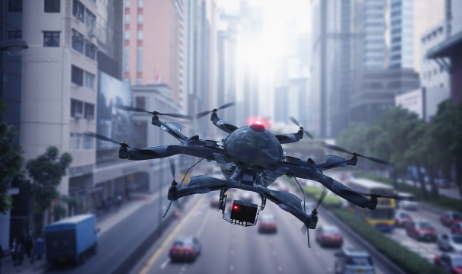
Drone incursions are no longer a rare event, and the buying market has rushed to keep up. The FAA logged 411 illegal drone incursions near US airports in the first quarter of 2025, a 25.6 percent increase over the same period a year earlier, and an Associated Press analysis found that drones now account for nearly two-thirds of reported near midair collisions at the nation's 30 busiest airports. Search "drone detection equipment" and you will find everything from a $300 handheld scanner to a six-figure radar array, all promising to solve the same problem.
We believe the right drone detection equipment is decided by your threat model and the airspace you need to cover, not by the price tag or the spec sheet. The categories look interchangeable from the outside and behave very differently in the field. This guide breaks down the four equipment categories, explains what each one can and cannot see, walks through what to look for before you buy, and answers the legal and cost questions that trip up most first-time buyers.
The four categories of drone detection equipment
Almost every detection product on the market is built around one or more of four sensor types. The US Government Accountability Office describes the core set plainly, noting that detection technologies include infrared devices to track heat signatures, radio frequency systems to scan for control signals, and acoustic methods to recognize the unique sounds produced by drone motors, alongside radar. Knowing which category a device belongs to tells you more about what it will do for you than any brand name.
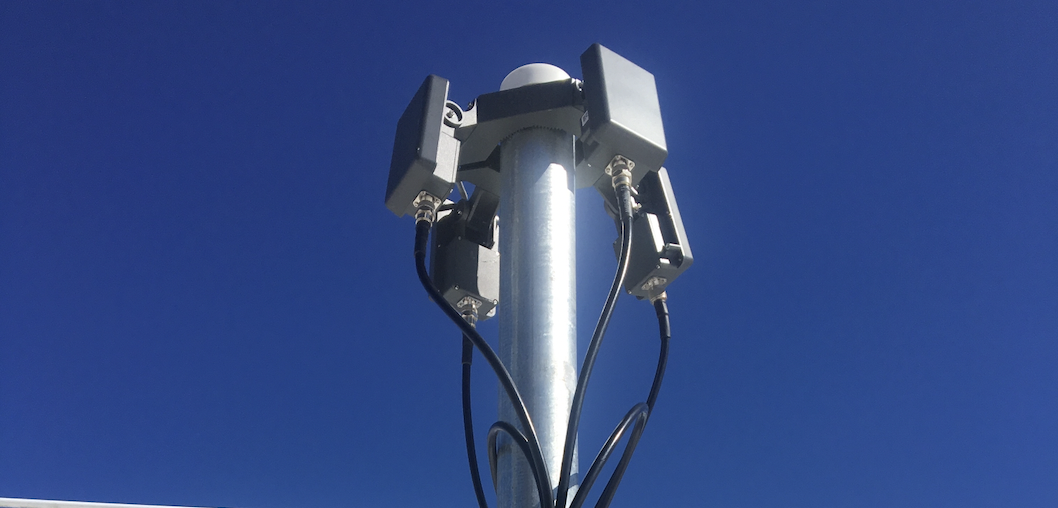
- Radio frequency (RF) sensors listen for the wireless link between a drone and its pilot. They can detect most commercially operated drones at range and often reveal the operator's location, without the drone broadcasting any identification.
- Radar senses anything that moves and reflects energy. It can track a drone that emits no radio signal at all, including autonomous and home-built aircraft, which makes it the workhorse for non-cooperative threats.
- Electro-optical and infrared (EO/IR) cameras add the visual layer. They read the airframe and the heat of the motors to turn a raw detection into a positive, human-verifiable identification.
- Acoustic sensors recognize the distinctive sound signature of drone propellers and motors. They work at shorter range but can help in cluttered environments where other sensors struggle.
The federal Cybersecurity and Infrastructure Security Agency organizes its UAS detection technology guidance around these same families, because the choice among them is the first real decision a buyer makes. The rest of this guide is about matching them to your site.
How each detection technology works, and where it fails
No category is a silver bullet, and the most expensive buying mistakes come from assuming one is. Each sensor type has a job it does well and a blind spot it cannot cover.
RF sensors are the most widely deployed starting point because they are passive, relatively affordable, and good at flagging the everyday consumer drone that is chatting with its controller. Their limitation is the same as their method: a drone flying a pre-programmed route with the radio link cut, or one built to stay quiet, gives an RF sensor nothing to hear. Our guide to how RF detection identifies unauthorized drones goes a level deeper on what that signal does and does not reveal.
Radar closes the gap that RF leaves open, because it does not care whether the drone is transmitting. The trade-off is that radar needs clear lines of sight and careful tuning, and small drones are hard targets. The GAO is candid that some of these technologies have a limited ability to detect and track small UAS under 55 pounds, the exact weight class most likely to show up over a stadium or a substation. EO/IR cameras resolve the ambiguity by letting an operator see the target, but they depend on a cue to know where to look and lose effectiveness at night or in poor weather without the infrared channel. Acoustic sensors add value at close range but fade in noisy, open environments.
False alarms are the other half of the field reality. The same GAO review warns that electromagnetic interference such as power lines and LEDs, and small airborne objects such as birds, can decrease detection capabilities or generate false detections. Equipment that cries wolf at every passing starling is a liability, not a safeguard, which is why how a system filters noise matters as much as how it detects signal.
Why no single piece of equipment is enough
The throughline of every federal assessment is that detection is a layering problem, not a single-purchase problem. The reason RF and radar are, in the GAO's words, the most common detection technologies is that the two cover each other's gaps: RF catches the cooperative, broadcasting drone cheaply, and radar catches the quiet one RF misses. Add cameras for identification and you have a system that can both find a drone and tell you what it is.
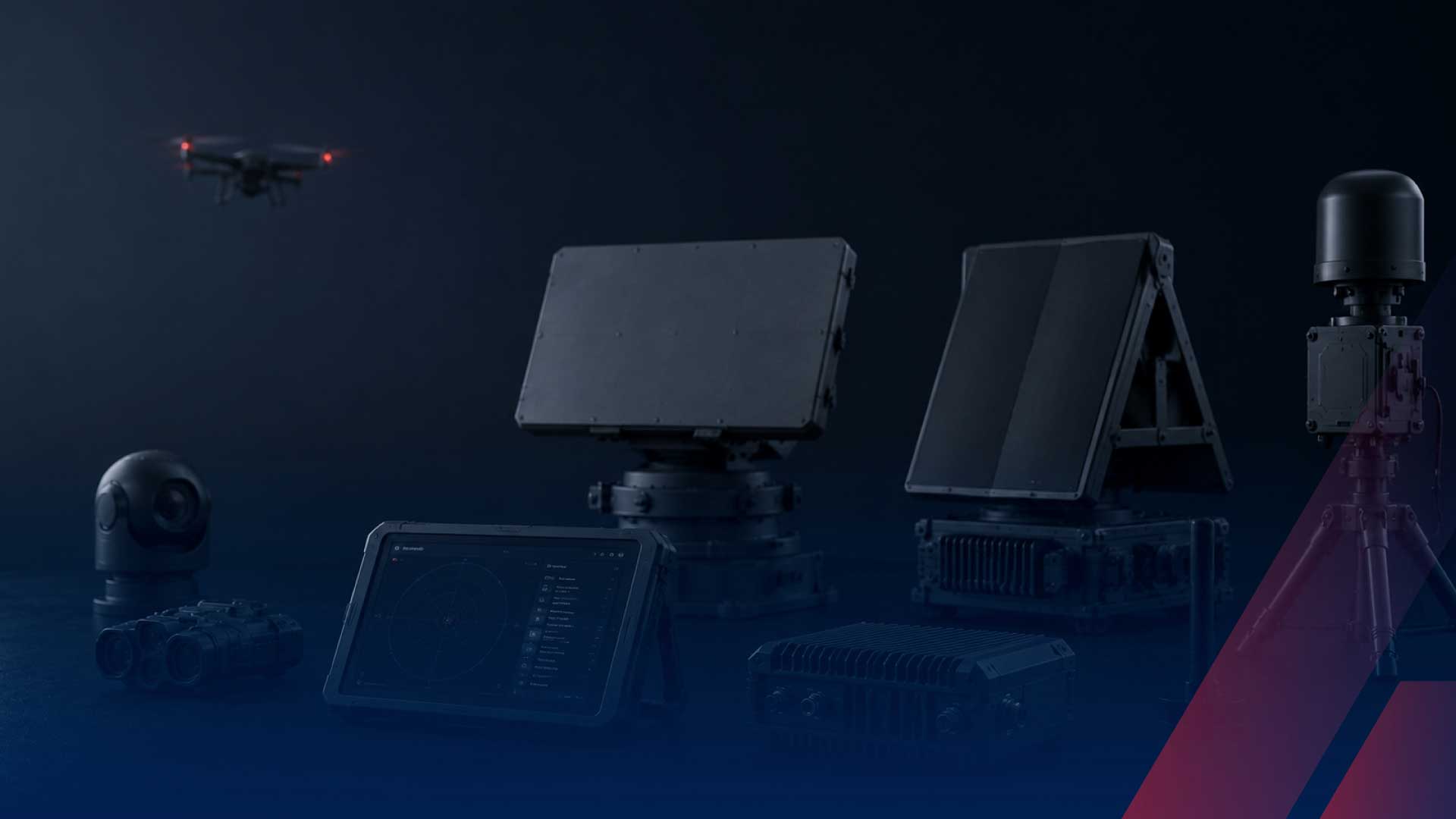
This is why serious drone detection equipment is sold as an integrated platform rather than a single box. Sensors spread across several hardware detection layers feed one engine that fuses their overlapping data into a single track, instead of leaving an operator to reconcile four separate alarm screens. That fusion is the entire point of our AirGuard command-and-control platform, which unifies radar, RF, and Remote ID into one operating picture so that the whole is more reliable than any sensor on its own. When you evaluate equipment, the question is not which sensor is best, but how well the system combines them.
What to look for when buying drone detection equipment
Once you understand the categories, a practical buyer's checklist falls out of them. We have seen the same handful of criteria separate equipment that protects a site from equipment that simply generates reports.
- Coverage area and uptime. A handheld detector watches the space around one person while it is switched on. A fixed system watches a defined perimeter continuously and unattended. Match the equipment to the area you actually need to defend, not the area a demo happens to cover.
- Non-cooperative detection. Ask directly whether the system finds drones that are not broadcasting Remote ID. If it relies on radio identification alone, it will miss exactly the drones that are operated to avoid being seen.
- Sensor mix for your environment. A clear, open airport approach favors radar; a dense urban campus with line-of-sight obstructions may lean harder on RF and cameras. The right mix is site-specific.
- Integration and command-and-control. Equipment that cannot feed your existing security operations, cameras, and response workflows creates work instead of removing it. A unifying software layer is what turns sensors into a usable capability.
- False-alarm handling. Given the GAO's warning about birds and interference, ask how the system distinguishes a real drone from environmental noise before you ever see a quote.
For a closer look at how individual devices stack up across this range, our breakdown of anti-drone devices from handheld detectors to enterprise systems compares the tiers side by side.
The legal line: detection you can use versus mitigation you cannot
Before any equipment ships, US buyers need to understand a hard legal boundary that the spec sheet will not mention. There is a sharp difference between detecting a drone and doing something to stop it. Congress has authorized only the Departments of Defense, Energy, Justice, and Homeland Security to actively mitigate drones, so jammers, spoofers, and kinetic counter-drone tools are off the table for nearly every private operator. An interagency advisory from the FAA, DOJ, DHS, and FCC lays out how federal law applies to detection and mitigation technology, and it is the document every buyer should read first.
Detection is broadly more permissible, but it is not a free pass. The same advisory cautions that some detection methods, especially those that intercept or capture the radio communications between a drone and its operator, can implicate federal criminal surveillance statutes. That is why CISA explicitly recommends that operators consult legal counsel before adopting UAS detection systems. The practical takeaway: buy equipment that detects, identifies, and documents, build your program around handing off to authorities, and get the legal review done before, not after, you deploy.
One identification tool sits squarely on the legal side of that line. Under the FAA's Remote ID rule, most drones weighing 0.55 pounds or more must broadcast their identification and location over Bluetooth and Wi-Fi, and reading that public broadcast is well within bounds. It is genuinely useful, but it only covers drones that choose to comply, which loops back to the central lesson of this guide: the equipment that matters most is the equipment that finds the drones staying quiet.
How much does drone detection equipment cost?
There is no single price, because "drone detection equipment" spans a portable handheld unit and a site-wide sensor network. A single RF detector can run from a few hundred to a few thousand dollars. A fixed, multi-sensor system that covers a full perimeter, fuses RF, radar, and cameras, and feeds a command-and-control platform is a capital investment that scales with the size of the area, the number and type of sensors, and the depth of integration with your existing security operation.
The more useful way to think about cost is by what the equipment can actually see. An inexpensive device that only reads Remote ID is not really cheaper than a layered system if it misses the non-broadcasting drone over your fuel farm, because the failure it permits is the entire reason you were buying. Price the coverage and the threat, not the box, and the budget conversation gets a lot clearer.
Choosing the right system
Drone detection equipment is finally mature enough that a buyer can assemble real airspace awareness from proven categories, but only if the pieces are chosen to fit the site and combined into one picture. RF tells you about cooperative drones, radar finds the quiet ones, cameras confirm what you are looking at, and software ties it together into a track you can act on. The buyers who get this right start from the threat and the perimeter and work back to the sensor mix, rather than starting from a product and hoping it covers the gap.
We believe the organizations that handle drones well stop shopping for a gadget and start designing a capability. With incursions climbing and the legal lines clearly drawn, the equipment to do it exists today, and the only question left is how well it is put together.
Interested in building drone detection equipment into a single, reliable picture of your airspace? Contact our team today to schedule a demo.
Frequently asked questions about drone detection equipment
What is drone detection equipment?
Drone detection equipment is the set of sensors and software used to find, track, and identify unmanned aircraft in a defined airspace. It falls into four main sensor categories: radio frequency (RF) sensors that listen for the link between a drone and its controller, radar that detects moving objects by reflected energy, electro-optical and infrared cameras that confirm a target visually, and acoustic sensors that recognize the sound of drone motors. Most professional systems combine several of these into one platform because no single sensor catches every drone.
Is there a device to detect drones?
Yes. Devices range from handheld RF detectors that a single person carries to fixed, multi-sensor systems that watch a perimeter around the clock. Handheld units are inexpensive and portable but cover only a small area while held and switched on. Fixed professional systems combine RF, radar, and cameras to provide continuous, unattended coverage of a site and can find drones that are not broadcasting any identification signal.
How much does drone detection equipment cost?
Cost spans a wide range. A single handheld RF detector can cost a few hundred to a few thousand dollars, while a fixed, multi-sensor system that covers a full perimeter and feeds a command-and-control platform is a larger capital investment that scales with the size of the area, the number of sensors, and the level of integration. The right way to budget is by threat model and coverage area rather than by sticker price, because an inexpensive device that misses non-broadcasting drones is not actually cheaper than a system that sees them.
Is it legal to use drone detection equipment in the US?
Detection is broadly more permissible than mitigation, but it is not automatically clear of all federal law. Congress has authorized only the Departments of Defense, Energy, Justice, and Homeland Security to actively mitigate or take down drones. For detection, an interagency advisory from the FAA, DOJ, DHS, and FCC warns that some technologies, particularly those that intercept radio communications, can implicate federal criminal surveillance statutes. CISA advises operators to consult legal counsel before adopting UAS detection systems.