On December 18, 2025, the SAFER SKIES Act became law as part of the FY2026 NDAA, and the counter-drone market changed overnight. For the first time, state, local, tribal, and territorial law enforcement and correctional agencies have legal authority to detect, track, and mitigate drone threats. With approximately 18,000 law enforcement agencies and 6,000 correctional facilities in the United States, this single piece of legislation expanded the counter-UAS buyer pool by orders of magnitude. If even 10% of eligible agencies deploy detection technology in the first implementation cycle, that is 2,400 new procurement contracts entering a market backed by $500 million in federal C-UAS grant funding.
We operate at the intersection of this shift, building detection and C2 technology that agencies need to operationalize their new authority. But the SAFER SKIES Act is bigger than any single vendor. This guide explains what the law actually authorizes, what agencies need to do to comply, and which types of companies are positioned to serve this new market.
What the SAFER SKIES Act Actually Authorizes
Prior to December 2025, only DHS, DOJ, DOD, and DOE had federal statutory authority to detect and mitigate drone threats. SLTT agencies that encountered unauthorized drones - at prisons, stadiums, airports, or critical infrastructure sites - had no legal pathway to act. Federal criminal law, wiretap statutes, and FAA regulations all created barriers.
The SAFER SKIES Act removes those barriers under tightly controlled conditions. As Homeland Security Today's analysis explains, certified SLTT agencies may now detect, track, seize, disable, or destroy drones that pose a credible threat in these contexts:
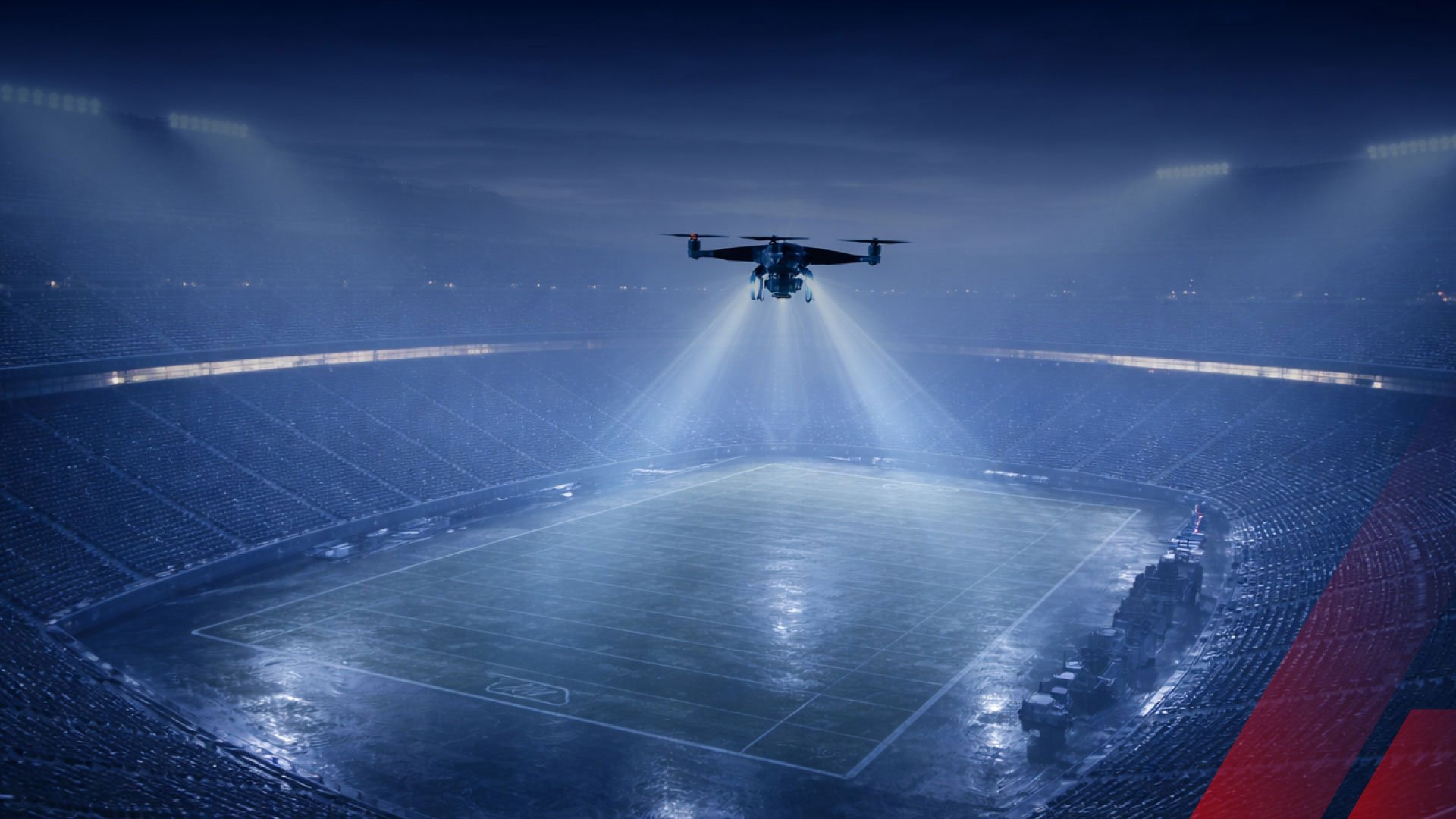
- Large public events and venues (stadiums, concerts, festivals, political gatherings)
- Critical infrastructure sites (energy facilities, water treatment plants, transportation hubs)
- Correctional facilities (prisons and jails - where drone-delivered contraband has become an escalating crisis)
- Public spaces designated as high-risk by authorized agencies
The authority expires December 31, 2031, giving agencies a six-year operational window with annual reporting to Congress on deployments, incidents, and recommendations for expansion.
The authority exists on paper. But turning it into operational capability requires three things: training, equipment, and a detection-first architecture.
Detection First, Mitigation Second: What Agencies Actually Need
SAFER SKIES requires a "credible threat" determination before any mitigation action. That means detection and situational awareness must be established before an agency can legally exercise its mitigation authority. The practical implication for procurement: the first wave of SLTT spending will be heavily weighted toward detection systems, C2 platforms, and sensor integration - not jammers and interceptors.
FEMA's C-UAS Grant Program reflects this by funding equipment across the full detection spectrum: radar, EO/IR cameras, passive acoustic sensors, and RF monitoring platforms. The grant also requires that participating agencies have personnel trained or scheduled for training at the FBI's National Counter-UAS Training Center (NCUTC). The FBI is currently training approximately 60 state and local officers to qualify on counter-drone equipment before the FIFA World Cup begins in June. The NCUTC flagship course runs two weeks and combines classroom instruction, hands-on training, and a capstone field exercise.
For agencies unfamiliar with drone detection technology, our guide to the five sensor modalities every buyer should understand provides the technical foundation for evaluating what each sensor type does and where it has limits. And our companion piece on procurement mistakes to avoid covers the five most common errors agencies make when buying counter-UAS technology for the first time.
The law and the funding define what is needed. The next question: which companies are built to serve this new buyer?
Who Is Positioned for the SLTT Market
The SLTT market has different requirements than the military or large-airport market. Agencies need systems that are affordable, deployable without extensive infrastructure, operable by personnel who are not full-time drone specialists, and compliant with the SAFER SKIES regulatory framework from day one. Three vendor categories are best positioned:
Integrated detection platform providers
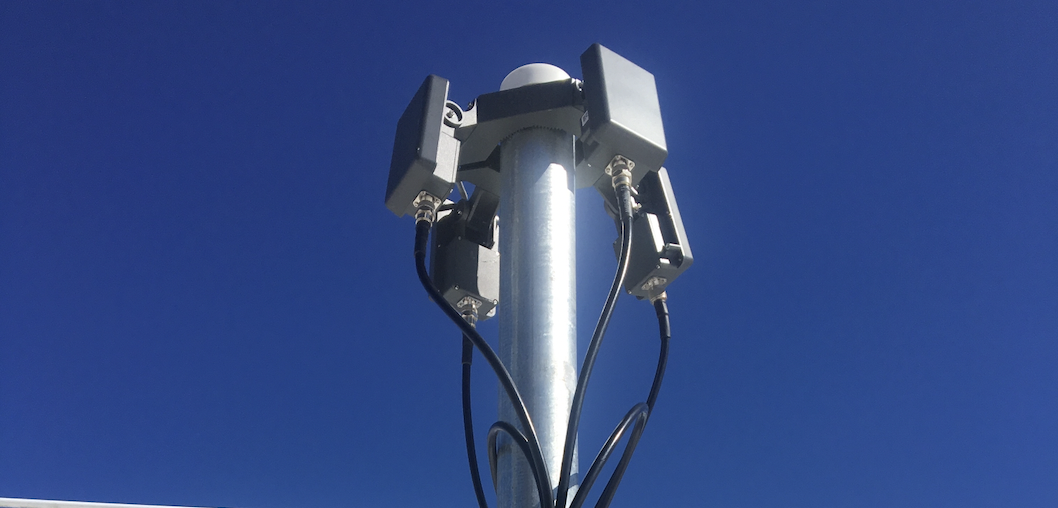
These companies offer multi-sensor fusion in a single C2 interface, reducing complexity for agencies that lack dedicated counter-UAS staff. The platform aggregates radar, RF, EO/IR, and Remote ID data into one operating picture so a single operator can monitor the airspace without switching between vendor-specific screens.
- AirSight (Dallas, TX) - AirGuard platform unifies radar, RF sensors, and Remote ID into a single C2 interface for airports, correctional facilities, and event venues.
- Dedrone (US/Germany, acquired by Axon 2024) - DedroneTracker cloud-based detection and C2 platform. One of the most widely deployed commercial counter-UAS systems in the US.
- DroneShield (Australia/US) - DroneSentry integrated detection system combining RF, radar, and acoustic sensors with a unified C2 layer.
Training and managed-services providers
Agencies deploying counter-UAS for the first time need more than hardware. They need training aligned with NCUTC requirements, operational procedure development, and ongoing support. Companies that bundle technology with training and managed services have a significant advantage in this market.
- Liteye Systems (Denver, CO) - Counter-UAS systems with integrated training and support packages for government and military clients.
- Sentrycs (Israel/US) - Autonomous counter-drone solutions with managed deployment services.
Scalable, modular sensor companies
Agencies with smaller budgets or single-site needs benefit from vendors that allow starting with a basic detection capability and expanding as budgets and authority grow. Modular architectures let agencies add sensor types incrementally rather than buying a full-stack system on day one.
- Robin Radar Systems (Netherlands/US) - Purpose-built drone detection radar that integrates with third-party C2 platforms.
- Echodyne (US) - Compact MESA radar designed for small-UAS detection in both fixed and mobile configurations.
- AeroDefense (US) - AirWarden RF-based drone detection platform designed for correctional facilities and critical infrastructure.
For a complete map of the five vendor categories in the counter-drone market, including defense primes, mitigation companies, and kinetic interceptor makers, read: Counter-Drone Companies: What Each Vendor Type Actually Does.
The vendors exist. The technology exists. The constraint is time.
The 180-Day Clock: What Happens Next
DHS and DOJ have 180 days from the Act's December 18, 2025 signing to publish implementing regulations, including training standards, the authorized equipment list, and compliance oversight procedures. That deadline falls in June 2026 - the same month the FIFA World Cup begins across 11 US cities. The timelines are not coincidental.
Agencies that understand the regulatory timeline and begin vendor evaluation now will be ready to deploy when implementing regulations are finalized. Those that wait will face equipment lead times, training backlogs at the FBI NCUTC, and - if they are hosting World Cup matches - a deadline that does not move.
The DHS Program Executive Office for UAS and Counter-UAS, launched in January 2026, serves as the permanent federal coordination hub between agencies with established counter-drone capabilities and the thousands of SLTT agencies now authorized to join them. This office is not a temporary task force. The counter-drone infrastructure being built for FIFA 2026 will become permanent operational capability.
For a full analysis of the federal funding landscape supporting these deployments, including the $250M FEMA grants, $115M DHS investment, and $1.5B contract vehicle, read: The Anti-Drone Market in 2026: Where $1.8 Billion in Federal Funding Is Going.
The Window Is Open - But It Has a Deadline
The SAFER SKIES Act created the authority. FEMA is providing the funding. The FBI is delivering the training. The DHS Program Executive Office is coordinating procurement. Every piece of the infrastructure is in motion. The only variable is whether individual agencies act fast enough to deploy detection capability before the implementing regulations are finalized and the 2026 event calendar begins.
For agencies entering the counter-UAS space for the first time, the learning curve is real but manageable. Start with our vendor evaluation framework to understand how to assess detection platforms. Review the five procurement mistakes to avoid before spending grant money. And understand the sensor technology landscape so you know what you are buying.
Ready to discuss your agency's SAFER SKIES deployment timeline? Talk to our team about your site, threat profile, and grant funding requirements.