The United States is pouring more than $4 billion into counter-drone capabilities in 2026 alone. The Department of Homeland Security has launched a dedicated Program Executive Office for UAS and Counter-UAS, FEMA is distributing $500 million in counter-drone grants to state and local agencies, and the Pentagon just completed safety testing on a high-energy laser designed to shoot down drones from the ground. Anti-drone systems are no longer a military niche. They are becoming standard infrastructure for airports, stadiums, prisons, and law enforcement agencies across the country.
We believe the organizations that invest in the right anti-drone system now will be the ones best positioned when the next threat materializes. But choosing the right system requires understanding what each technology does, how systems are layered together, and how much protection your facility actually needs. This guide breaks down anti-drone systems by function, protection level, and cost, so you can make an informed decision backed by the same framework we use to help our own customers.
What Is an Anti-Drone System?
An anti-drone system is any combination of technologies designed to detect, track, identify, and, where legally authorized, mitigate unauthorized unmanned aircraft. The term covers everything from a single RF sensor mounted on a rooftop to a full-spectrum command-and-control platform integrating radar, cameras, radio frequency analyzers, and electronic countermeasures.
The distinction between detection and mitigation matters more than most buyers realize. Detection means identifying that a drone is present and tracking its location. Mitigation means actively stopping it, whether by jamming its radio link, spoofing its GPS signal, capturing it with a net, or disabling it with directed energy. Under US law, only federal agencies and newly authorized state and local law enforcement can legally operate mitigation equipment. The SAFER SKIES Act, signed into law as part of the FY2026 NDAA, expanded these authorities to state, local, tribal, and territorial agencies for the first time, but with strict requirements for federal training and certification.
For most organizations, the practical starting point is detection. You cannot defend against what you cannot see. A detection-first approach builds the situational awareness foundation that makes mitigation effective if and when it becomes legally and operationally appropriate.
Types of Anti-Drone Devices by Function
Anti-drone devices fall into two categories: sensors that detect and effectors that respond. Understanding each type is critical for building a system that matches your threat profile.
Detection technologies include:
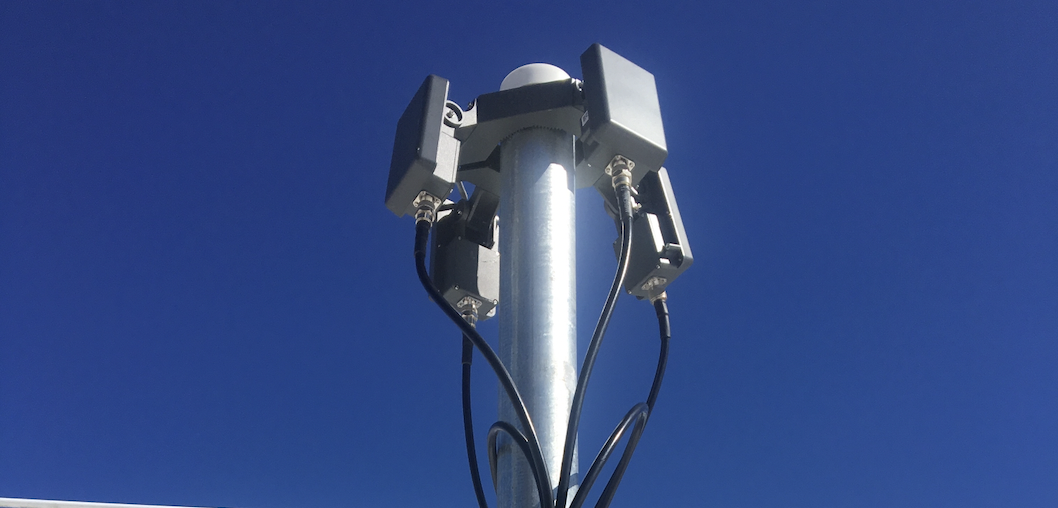
- Radio Frequency (RF) sensors analyze the radio signals drones use to communicate with their operators. RF detection is the most common and cost-effective first layer because most commercial drones broadcast on well-known frequencies. RF sensors can also identify the drone's make and model and, in many cases, locate the operator.
- Radar systems detect drones by their physical presence in the airspace, regardless of whether the drone is emitting a radio signal. This makes radar essential for countering autonomous or modified drones that do not rely on standard communication links. Radar is particularly effective for long-range detection in open areas like airports and borders.
- Electro-optical and infrared (EO/IR) cameras provide visual confirmation of detected objects. Cameras help operators distinguish between a drone and a bird, verify threat severity, and collect forensic evidence. They are typically cued by RF or radar alerts rather than used for primary detection.
- Acoustic sensors listen for the distinctive sound signatures of drone propellers. While limited in range, acoustic sensors are fully passive and can detect drones in environments where RF and radar face interference. A US firm recently unveiled a new system built around AI-powered acoustic sensing for tracking small drone threats.
- Remote ID receivers capture the broadcast identification signals that the FAA now requires on most drones. Remote ID provides the drone's serial number, location, altitude, velocity, and operator location, making it a valuable first filter for distinguishing compliant recreational drones from potential threats.
For a deeper technical dive into how each of these five sensor modalities works, including their detection ranges, strengths, and blind spots, read our guide on drone detection technology and sensor modalities.
Mitigation technologies include RF jammers that sever the drone-to-operator link, GPS spoofers that redirect the drone's navigation, net-based interceptors launched from ground or air platforms, high-power microwave devices, and high-energy lasers. The Pentagon's Counter-UAS Marketplace now catalogs more than 1,600 counter-drone items available for expedited military procurement, reflecting the breadth of options now on the market.
Under the FEMA C-UAS Grant Program, state and local agencies can purchase detection, identification, monitoring, and tracking (DIMT) equipment with grant funds. Mitigation equipment is also eligible, but only for law enforcement agencies whose personnel have completed training at the FBI's National Counter-UAS Training Center in Huntsville, Alabama.
How to Choose the Best Anti-Drone System for Your Facility
Before choosing specific equipment, the foundational decision is architectural: do you need an integrated platform or a collection of point solutions? Once that decision is made, the next question is scale. The right anti-drone system depends on three variables: what you are protecting, what threats you expect, and how much you can invest. Industry analysts note that the cost difference between a basic RF detection setup and a fully layered defense network can range from $250,000 to several million dollars. We use a three-tier framework to help organizations match their investment to their actual risk.
Tier 1: Basic Detection ($50,000 to $150,000)
A single-sensor deployment, typically an RF analyzer or a Remote ID receiver, paired with alerting software. This tier is appropriate for correctional facilities dealing with contraband delivery drones, corporate campuses concerned about surveillance, and local police departments building their first counter-drone capability. Tier 1 systems answer the fundamental question: is there a drone in my airspace right now?
Tier 2: Layered Detection ($150,000 to $500,000)
Multiple sensor types integrated through a command-and-control platform that fuses data from RF, radar, and cameras into a single operating picture. This tier is designed for airports, power plants, stadiums hosting large events, and government facilities that need to detect both commercial drones and modified aircraft that may not broadcast standard RF signals. Layered detection dramatically reduces false positives because each sensor type confirms or denies what the others report.
Tier 3: Full-Spectrum C2 ($500,000 to $2 million+)
A comprehensive multi-layered drone detection platform combining every available sensor modality with active mitigation capabilities, managed through an enterprise-grade command-and-control system. This tier supports multi-site deployments, drone swarm scenarios, and 24/7 autonomous monitoring. Full-spectrum systems are typically deployed at critical infrastructure sites, international airports, military installations, and high-profile events like the FIFA World Cup. The Pentagon's Inspector General report revealed that many military installations lacked adequate counter-drone coverage due to policy confusion, and JIATF-401 is now working to standardize deployments at this tier.
Once you know which tier fits your facility, the next step is evaluating specific vendors. We built a four-question framework for evaluating drone detection companies that helps procurement teams cut through marketing claims and focus on what actually matters in a deployment.
What Anti-Drone Systems Cost and How to Fund Them
Anti-drone system pricing varies significantly depending on sensor count, coverage area, integration complexity, and whether mitigation is included. The following table provides general ranges based on publicly available procurement data and industry analysis.
| System Tier | Price Range | Typical Components | Best For |
|---|---|---|---|
| Tier 1: Basic Detection | $50K - $150K | RF sensor or Remote ID receiver + alerting software | Prisons, campuses, local PDs |
| Tier 2: Layered Detection | $150K - $500K | RF + radar + EO/IR camera + C2 platform | Airports, stadiums, power plants |
| Tier 3: Full-Spectrum C2 | $500K - $2M+ | Multi-sensor fusion + mitigation + enterprise C2 + multi-site | Critical infra, military, major events |
The most significant development in anti-drone system funding is the FEMA Counter-UAS Grant Program. Established under the One Big Beautiful Bill Act of 2025, the program provides $500 million over two fiscal years. In FY2026, $250 million was prioritized for 11 states hosting FIFA World Cup 2026 matches. In FY2027, the remaining $250 million opens to all 56 states and territories. Grant funds cover 100% of eligible costs with no local match required.
Eligible purchases include RF detection systems, radar, optical sensors, and tracking software. Mitigation equipment is also eligible for law enforcement agencies whose personnel are trained or enrolled at the FBI's National Counter-UAS Training Center. FEMA completed award distribution in just 25 days, calling it the fastest non-disaster grant award in the agency's history.
For military and federal buyers, the JIATF-401 Counter-UAS Marketplace provides a streamlined procurement channel with over 1,600 counter-drone products available for expedited purchase, bypassing the traditional defense acquisition timeline. For a complete picture of the $1.8 billion federal funding landscape shaping the anti-drone market, read our analysis of anti-drone market trends and federal funding in 2026.
From Battlefield to Backyard: Real-World Anti-Drone Deployments
The operational reality of anti-drone systems is being written in real time. Several deployments in 2025 and 2026 illustrate how these systems perform outside the lab.
The Merops drone-on-drone interceptor, built by Perennial Autonomy (backed by former Google CEO Eric Schmidt), was deployed to NATO nations Poland and Romania in late 2025 after Russian attack drones repeatedly entered allied airspace. The system was subsequently sent to the Middle East to counter Iranian Shahed drones, demonstrating a low-cost, AI-powered approach to drone-on-drone interception.
At the same time, the Pentagon and FAA completed safety validation of a high-energy laser system at White Sands Missile Range, confirming that directed-energy weapons can operate within the National Airspace System without endangering commercial aviation. This clears a major regulatory hurdle for laser-based counter-drone systems at domestic installations.
Domestically, the $250 million FEMA award to FIFA World Cup host states is driving the largest single deployment of state and local counter-drone equipment in US history. Eleven states are procuring detection and tracking systems ahead of matches running from June through July 2026, with equipment remaining permanently in local law enforcement arsenals after the tournament.
AUVSI CEO Michael Robbins summarized the lesson from these deployments: the US must accelerate deployment of sophisticated counter-drone technologies so forces can defend bases and populations without spending a million dollars to stop a $50,000 threat. The cost asymmetry problem is the central challenge driving innovation across every tier of the anti-drone market.
Choosing the Right Anti-Drone System Starts with Understanding Your Airspace
The anti-drone system market is being reshaped by three converging forces: new federal funding through the FEMA C-UAS Grant Program, expanded legal authority under the SAFER SKIES Act, and a Pentagon-led push to standardize and accelerate counter-drone procurement. For the first time, state and local agencies have both the legal authority and the financial resources to deploy anti-drone systems at scale.
The window to act is now. With FY2027 grant eligibility expanding to all 56 states and territories, organizations that begin their assessment today will be best positioned to secure funding and deploy effective protection before the next threat emerges. Whether you need a single-sensor detection layer or a fully integrated multi-layered drone detection platform, the first step is understanding what is flying in your airspace.
This is the first in our series on deploying anti-drone systems by protection level and vertical. Coming next: detailed deployment guides for airports, event venues, correctional facilities, and critical infrastructure. In the meantime, explore our Series 1 guides for the technical and procurement foundation:
- Sensor Technology: Understanding the Five Detection Modalities
- Vendor Evaluation: A Four-Question Framework
- Architecture Decision: Integrated Platforms vs. Point Solutions
Ready to discuss your specific facility? Talk to our team about your site and threat profile.