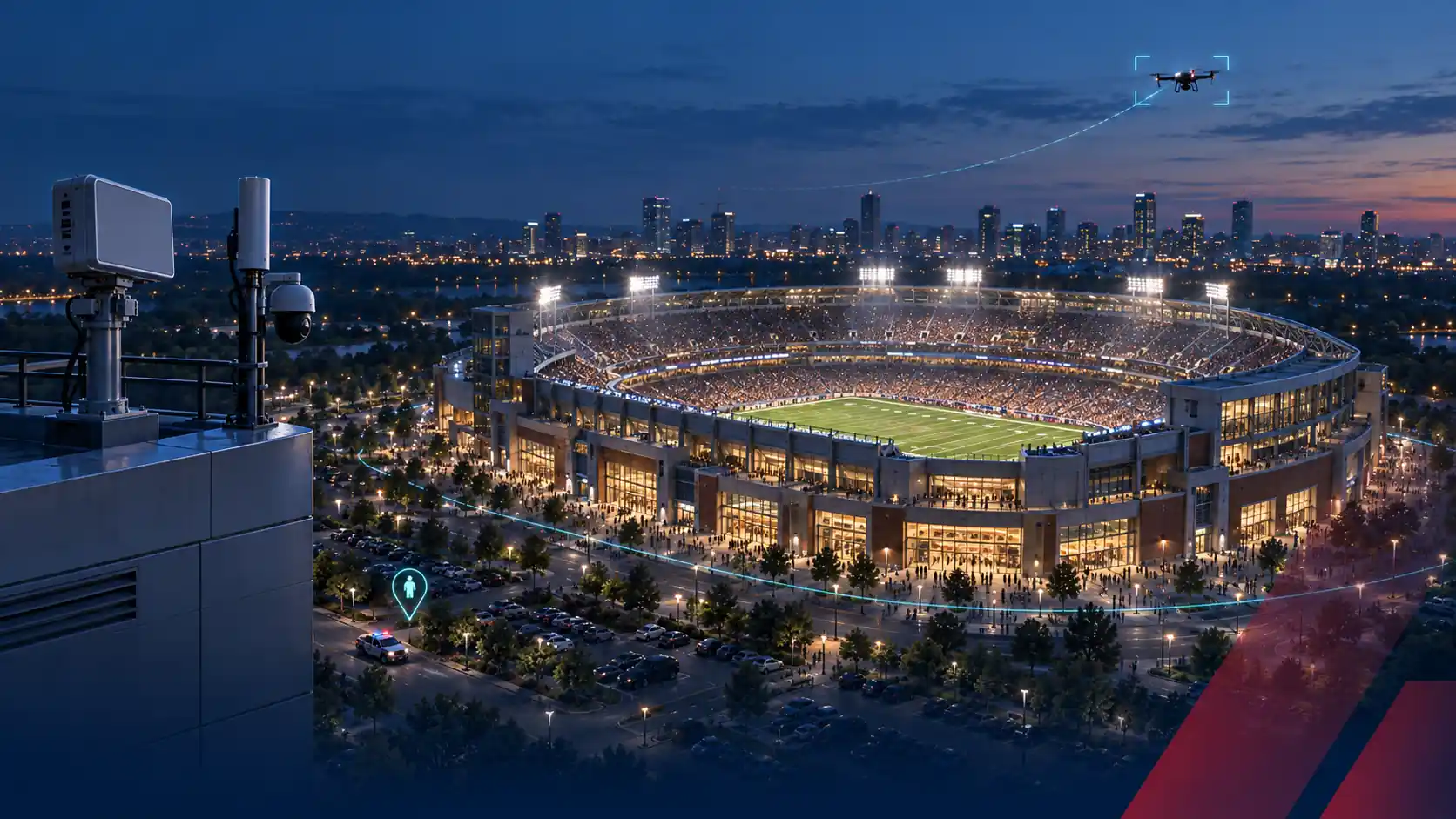
Drone detection for events and stadiums gives venue security a live picture of every drone in the airspace around a game, concert, or festival: where it is, where it is heading, and, for drones that broadcast Remote ID, where the operator is standing. With that picture, security and police can reach the operator fast, keep play running when a drone is harmless, and act quickly when it is not. It is how modern venues keep fans safe and the game on.
At AirSight, we build drone detection for stadiums, arenas, and the events that fill them. This guide covers what the numbers show, what detection does on event day, and how venues build a program that gets stronger every season.
The Numbers Behind Event-Day Airspace
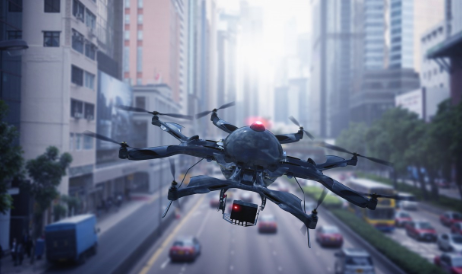
Drones around games are a weekly reality. The NFL told Congress it counted 2,845 drone incursions into stadium airspace in 2023, up from 2,537 the year before, and in January 2025 a drone paused the Ravens-Steelers playoff game in Baltimore, as DroneXL has reported. Our coverage of the Baltimore incident details what followed.
The 2026 FIFA World Cup showed the scale of the challenge, and what coordinated airspace security can achieve. The FAA established nearly 250 temporary flight restrictions covering match venues, fan festivals, team hotels, and training sites. Ground Intercept Teams of federal and local personnel worked at venues, and the FBI and the Department of Homeland Security seized more than 700 drones operating in restricted airspace across all 11 U.S. host cities, according to the FAA. Officials said those drones were seized before they could disrupt tournament activities.
The Airspace Is Protected. Detection Lets You See Who Is In It.
Major stadiums already sit under a standing FAA flight restriction: no drones within 3 nautical miles and up to 3,000 feet of venues seating 30,000 or more, from one hour before a regular or postseason NFL, MLB, or NCAA Division I football game, or a major motorsport race, until one hour after it ends. The details of the stadium restriction are worth knowing, and major events such as the World Cup can receive restrictions of their own.
A restriction defines the space. Detection shows who is in it, where they launched from, and whether they are leaving or circling back. That is the difference between knowing the rules exist and being able to act on them in real time.
What Drone Detection Does on Event Day
-
Set the baseline before gates open. Authorized media, broadcast, and public safety drones are logged in advance, so the security team can focus on everything else.
-
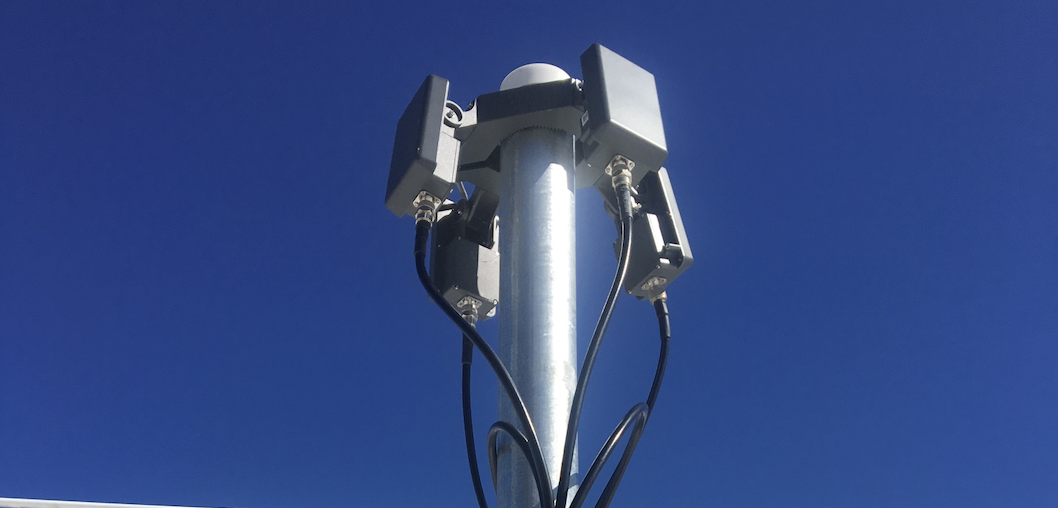
Detect and identify. Radio frequency sensors and Remote ID receivers pick up drones that transmit. Under the FAA's Remote ID rules, most drones broadcast an identifier and their position, along with the control station location or, for add-on broadcast modules, the takeoff location. Our RF drone detection guide explains how this works, and radar adds coverage for drones that transmit nothing.
-
Find the operator. Officers go straight to the operator's location instead of searching the crowd. During the World Cup in Los Angeles, operators were cited and required to surrender their drones, according to the FBI.
-
Keep play going, or pause with confidence. A live track shows whether a drone is over the seating bowl or holding outside the venue, so officials can make the call quickly and with facts.
-
Record everything. Tracks, operator locations, and outcomes are logged for enforcement and for planning the next event.
Turning a Season of Data Into a Safer Venue
One event tells you what happened. A season tells you why. Over a schedule of games, detection records show which kickoff times draw the most activity, which parking lots and neighborhoods operators launch from, and which aircraft come back. Security leaders use that pattern to position staff, coordinate with police before game day, and measure whether outreach and enforcement are working. Our guide to drone monitoring covers the alert workflow that keeps a program sharp, and our stadium risk assessment guide is a practical place to start.
Beyond the Stadium: Concerts, Festivals, and Community Events
Drone detection for events reaches well beyond football. Concerts, festivals, marathons, parades, and graduations draw crowds that attract drones, and many happen at locations that change from one event to the next. Portable deployments bring the same live picture to a festival ground or a race route for the length of the event. Our event risk assessment guide walks through planning for these gatherings. You can also explore our page on drone detection for live events.
Partners Make It Work
Venues rarely act alone. Detection gives security teams the picture, and police and federal partners provide the response. Since Congress passed the Safer Skies Act in December 2025, state and local law enforcement agencies that meet training requirements can receive counter-drone mitigation authority, according to the FAA, and our drone mitigation guide explains how that certification works.
Funding has followed. The FAA notes that a $500 million counter-drone grant program supports state and local procurement of equipment, with the first $250 million awarded to World Cup host cities and states. Our FEMA Counter-UAS Grant Program guide covers how the program works.
Keeping Fans Safe and the Game On
Every week, drones find their way to the places where people gather. The venues that handle them best see every drone early, reach operators fast, keep play running whenever it is safe to, and learn from every event. Drone detection for events and stadiums makes all four possible, and it gets more valuable with every game on the schedule.
Planning drone detection for your venue or your next event? Talk to our team.
Related reading: