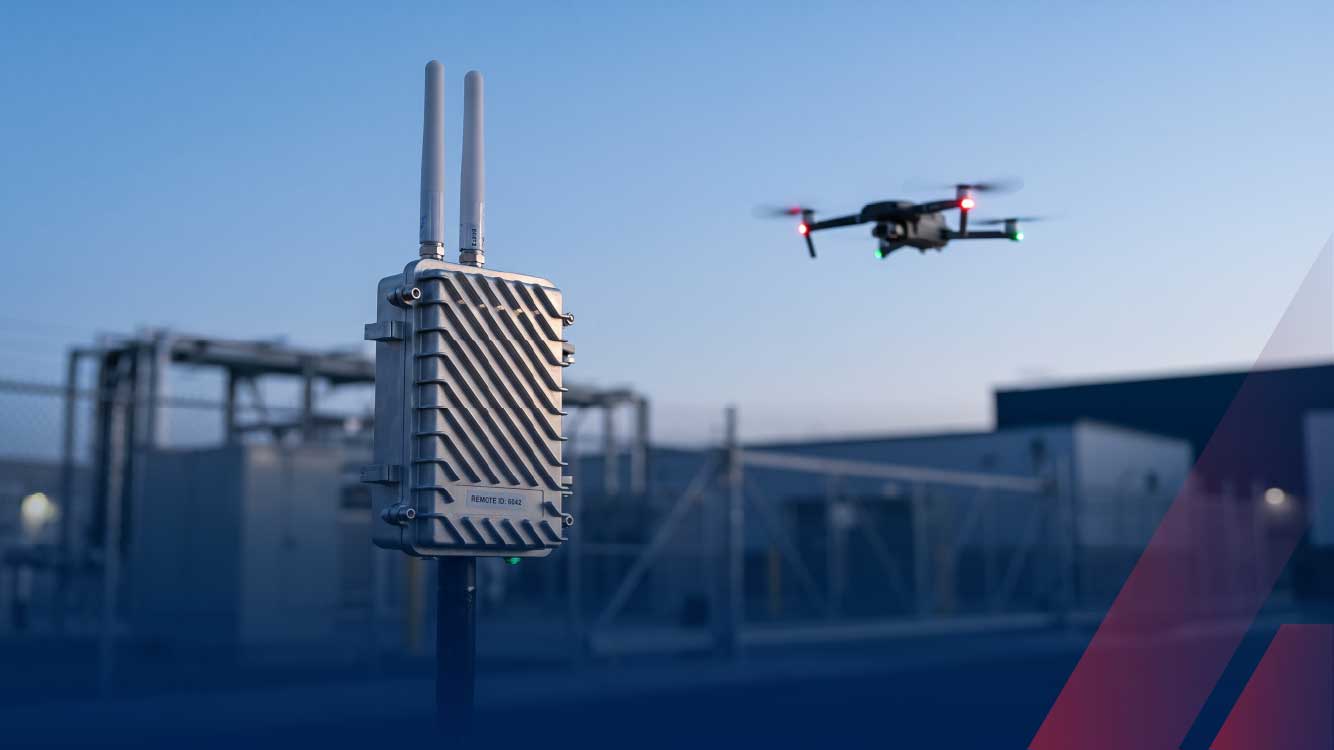
A Remote ID receiver is a sensor that listens for the identification signals drones are required to broadcast in the United States. It picks up each compliant drone's identity, position, altitude, and speed, along with the location of its control station or takeoff point. For security teams, a Remote ID receiver is one of the fastest ways to identify the drones flying near a site and to find the people flying them, and it is the foundation layer of a complete drone detection system.
At AirSight, Remote ID is the first sensor tier in our AirGuard platform. This guide explains what Remote ID receivers show, how security-grade receivers differ from phone apps, and how Remote ID combines with RF and radar for complete coverage.
What Remote ID Requires
Under the FAA's Remote ID rule, since September 16, 2023, drones that are registered or required to be registered must meet Remote ID requirements to fly in U.S. airspace. Operators can comply in two ways: by flying a standard Remote ID drone with broadcasting built in, or by attaching a Remote ID broadcast module. A standard Remote ID drone must broadcast from takeoff to shutdown, and if the broadcast stops, the pilot must land as soon as practicable. Drones without Remote ID equipment may fly only within FAA-recognized identification areas. Our guide to Remote ID covers the rule in depth.
What a Remote ID Receiver Shows
The rule sets the minimum information each broadcast must carry, and the details differ slightly between standard Remote ID drones and drones using a broadcast module:
| Message element | Standard Remote ID drone | Drone with a broadcast module |
| Identity | Serial number or session ID | Serial number of the module |
| Drone position | Latitude, longitude, altitude | Latitude, longitude, altitude |
| Drone velocity | Yes | Yes |
| Where the operator is | Control station location and altitude | Takeoff location and altitude |
| Time mark | Yes | Yes |
That makes a Remote ID receiver unusually powerful for its size. In a single message it answers three questions a security team cares about most: which drone this is, where it is going, and where the person flying it is likely to be.
Phone Apps and Security-Grade Receivers
Remote ID broadcasts use radio spectrum compatible with personal wireless devices, so smartphone apps can read the broadcasts of nearby drones. That is a useful tool for an individual curious about a drone overhead.
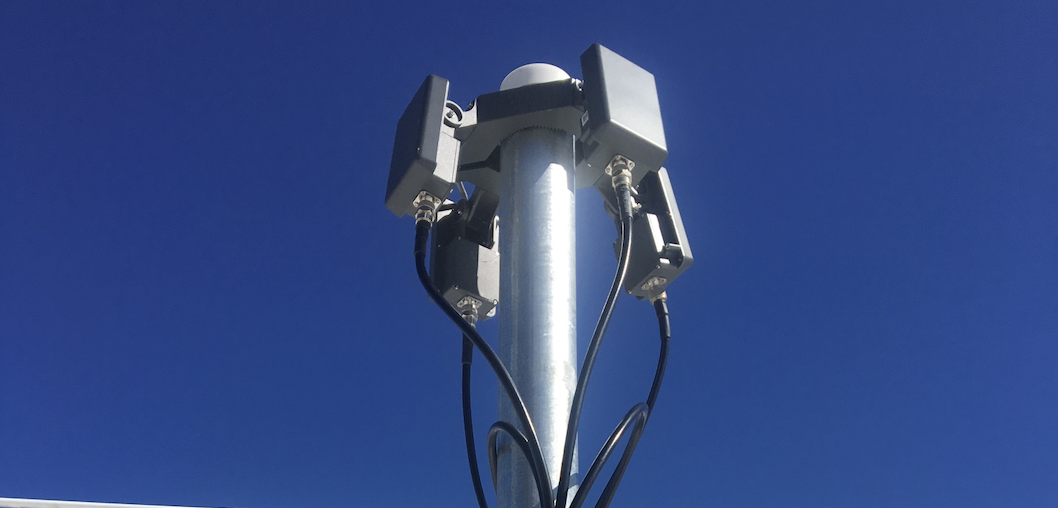
Security teams need a receiver built for continuous coverage. AirSight's Remote ID sensor detects Remote ID drones across the 2.4 GHz and 5.8 GHz bands, carries an IP67 weatherproof rating, connects over Ethernet with an LTE option, and mounts on a wall or pole. Because it feeds AirGuard, every detection is logged, mapped, and turned into an alert for the right people, around the clock, instead of depending on someone holding a phone in the right place.
Building on Remote ID: Why Layers Matter
Remote ID identifies the drones that broadcast as the rule requires. Together with RF sensors, it covers the vast majority of consumer and commercial drones, and a complete detection system adds layers for the rest:
-
Drones outside the rule. The requirement covers drones that are registered or required to be registered, so some small recreational drones are not required to broadcast. Older drones without a broadcast module, and homemade or modified drones, may not broadcast either.
-
RF sensors detect drones by their control and video signals and can estimate where the pilot is, whether or not the drone broadcasts Remote ID. Our RF drone detection guide explains how.
-
Radar detects drones by their physical presence, including drones that transmit nothing at all, as our drone detection radar guide describes.
-
Cameras confirm visually what the other sensors detect.
AirGuard's hardware tiers build exactly this way: Remote ID first, then RF direction finding, then radar with a visual camera. For a deeper look at how the two fit together, see Remote ID and drone detection.
How AirGuard Turns Remote ID Into Action
-
One drone, one track. AirGuard's data fusion merges detections of the same drone from multiple Remote ID and RF sensors into a single track on the live map, with the pilot or controller position fused automatically.
-
Drone and pilot on one map. The live GPS positions of the drone and its pilot appear together, and positions update every two seconds to draw the flight path. Our guide to drone tracking explains how tracks are built.
-
Alerts that matter. Geofences trigger alerts when a drone enters a defined zone, and whitelisted drones, such as your own or a partner agency's, are set aside.
-
A complete record. Flight History and Playback and the Advanced Analytics Dashboard show every past flight, recurring drones, and patterns by time and zone.
-
Straight to response. With AirSight x Skydio, a detection in a Skydio-enabled zone creates live incident markers for the drone and pilot in Skydio's DFR Command Center.
Planning Remote ID Coverage for Your Site
-
Map what matters. Place receivers to cover the approaches to your most important areas, from a stadium bowl to a prison yard to a runway.
-
Connect it to a platform. A receiver is most valuable when its detections are fused, alerted, and recorded in one place.
-
Plan the next layer. Start with Remote ID and add RF and radar as your needs grow, on the same platform.
-
Explore funding. Public agencies can fund detection through the FEMA Counter-UAS Grant Program.
Remote ID Receiver FAQ
Can a Remote ID receiver find the pilot?
Yes, in most cases. Standard Remote ID drones broadcast the location of the control station, and drones with a broadcast module broadcast their takeoff location. AirGuard shows that position on the same map as the drone.
Do all drones broadcast Remote ID?
No. The requirement applies to drones that are registered or required to be registered, and drones without Remote ID may fly only within FAA-recognized identification areas. That is why AirGuard pairs Remote ID with RF and radar.
Can my phone receive Remote ID?
Often, yes. Broadcasts use spectrum compatible with personal wireless devices, so apps can read nearby drones. Security teams use mounted, networked receivers for continuous coverage and records.
Start With Remote ID, Build to Complete Coverage
A Remote ID receiver is one of the fastest ways to know who is flying near your site and where they are standing. Paired with RF, radar, and cameras in AirGuard, it becomes part of a complete airspace picture that grows with your needs. See AirGuard at work in our case studies.
Ready to see the drones near your site? Book a demo with our team.