An anti-drone system proves its value in the field: at a stadium on game day, around an airport during the evening rush, over a prison yard at night, and at the biggest events in the world. Real deployments show the same pattern again and again. The systems that perform see drones early, find the pilot fast, and give security teams the facts to act. Here is what those deployments look like, and how AirSight's AirGuard delivers in each one.
World Cup 2026: Airspace Security at Global Scale
The 2026 FIFA World Cup showed what coordinated airspace security can achieve. The FAA established nearly 250 temporary flight restrictions covering match venues, fan festivals, team hotels, and training sites. Ground Intercept Teams of federal and local personnel worked at venues, and the FBI and the Department of Homeland Security seized more than 700 drones in restricted airspace across all 11 host cities, before they could disrupt the tournament, according to the FAA.
Local teams were central to that success. In Los Angeles, the FBI said 59 drones were seized, and operators were cited and required to surrender their drones. In New York, NYPD teams found and tracked drones while federal partners handled mitigation, as NY1 reported, and Police Commissioner Jessica Tisch said more than 100 drones were grounded during the World Cup games where NYPD officers worked alongside the FBI, according to Police1.
The U.S. Open: Local Authority in Action
Weeks later, the 2026 U.S. Open became the first major event where state or local law enforcement held independent authority to conduct drone mitigation, with trained and certified NYPD personnel ready to exercise the authority created by the Safer Skies Act, as NY1 reported. The milestone shows where public safety is heading: local teams that can detect, track, and respond on their own. Our drone mitigation guide explains how agencies earn that authority, and every response starts with an anti-drone system that sees the drone first.
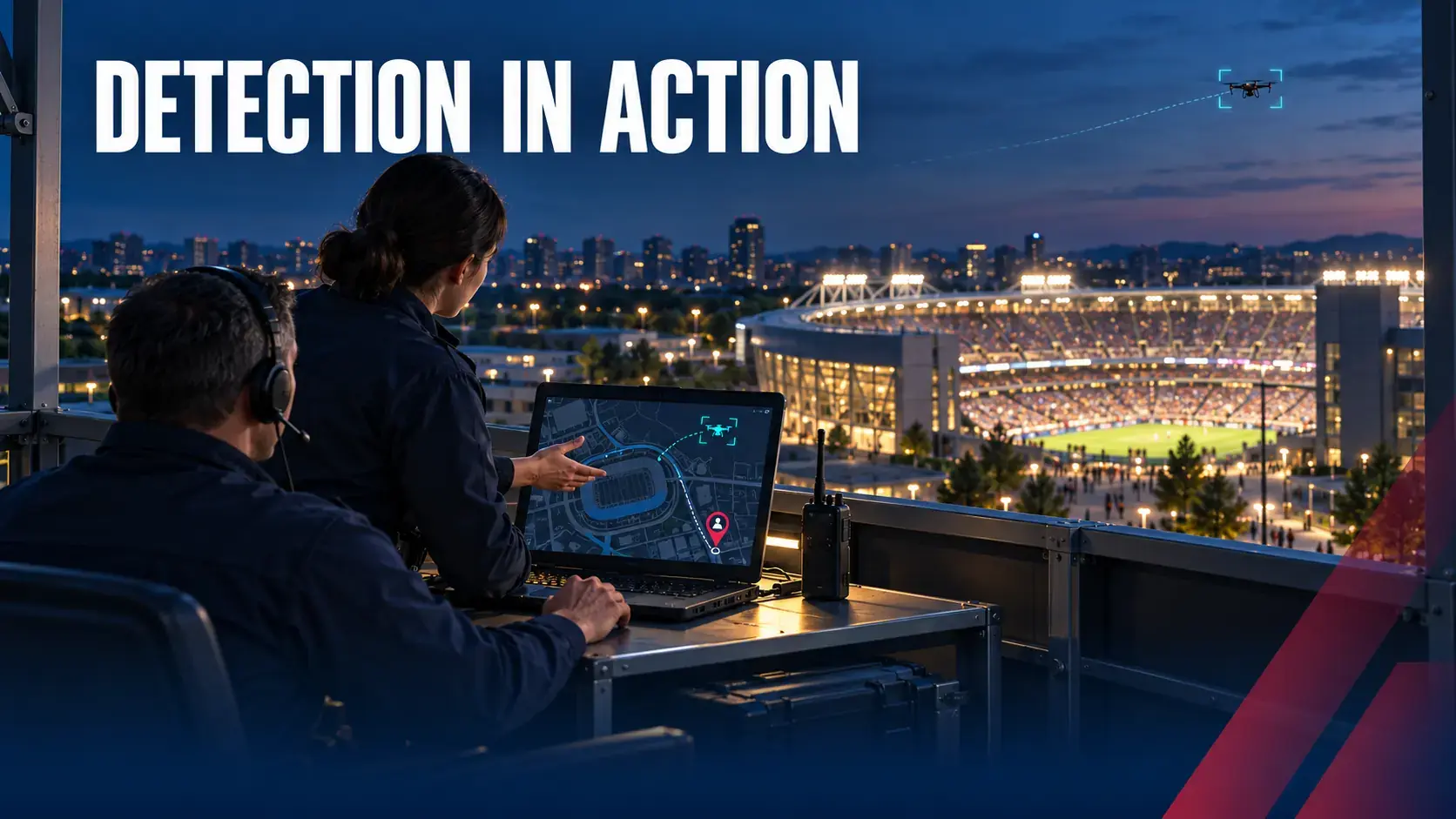
Stadiums: Protecting Game Day
The NFL told Congress it counted 2,845 drone incursions into stadium airspace in 2023, and in January 2025 a drone paused a playoff game in Baltimore, as DroneXL has reported. Venues answer with detection that finds operators fast and keeps play going.
-
Camping World Stadium: AirSight supported three major sporting events, including the NFL Pro Bowl (case study).
-
Super Bowl LIX: Louisiana State Police called AirSight's technology a force multiplier that increased its ability to respond to potential threats (case studies).
-
St. Jude golf tournament: in partnership with the Shelby County Sheriff's Office, AirSight provided comprehensive drone detection for the high-profile event.
See drone detection for spectator sports.
Airports: Seeing What People Miss
The FAA's public records list 568 reports of drones near airports from July through September 2026. Detection shows how much more is out there: when the TSA tested detection technology at LAX, it said there had been about 90 visual sightings and roughly 5,200 technical detections within three miles of the airport between 2021 and 2022. AirGuard gives airport teams a live track, the pilot's location, and an optional ADS-B view of manned aircraft on the same screen. See drone detection for airports.
Prisons: Finding the Pilot Behind the Drop
Department of Justice and FBI officials have testified that drone incidents at federal prisons rose from 23 in 2018 to 479 in 2024, as Facilities Dive has reported. State systems are fighting back with detection: South Carolina's Department of Corrections adopted radar technology that detects drones and traces their paths, so its drone team can work with local law enforcement to find pilots near the takeoff location, as Fox News has reported. That is exactly the outcome AirGuard is built for: the drone, the pilot, and the pattern behind repeat drops. See drone detection for prisons.
Police and Public Safety: From Detection to Response
-
Chula Vista Police Department: the city chose AirGuard to provide third-party tracking for all of its police department's drone flights (case study).
-
A popular destination hotspot: a pilot flying an unauthorized flight was caught and reprimanded using AirSight's drone detection platform (case study).
-
Detection to response: with AirSight x Skydio, AirGuard instantly shares detection data with Skydio, so operators can launch an autonomous drone that streams live intelligence to officers.
See drone detection for law enforcement.
Campuses: Everyday Protection
Anti-drone systems are not only for headline events. The University of Kentucky is building a safer campus with AirSight's drone detection, protecting students and staff every day (case study).
What the Strongest Deployments Have in Common
-
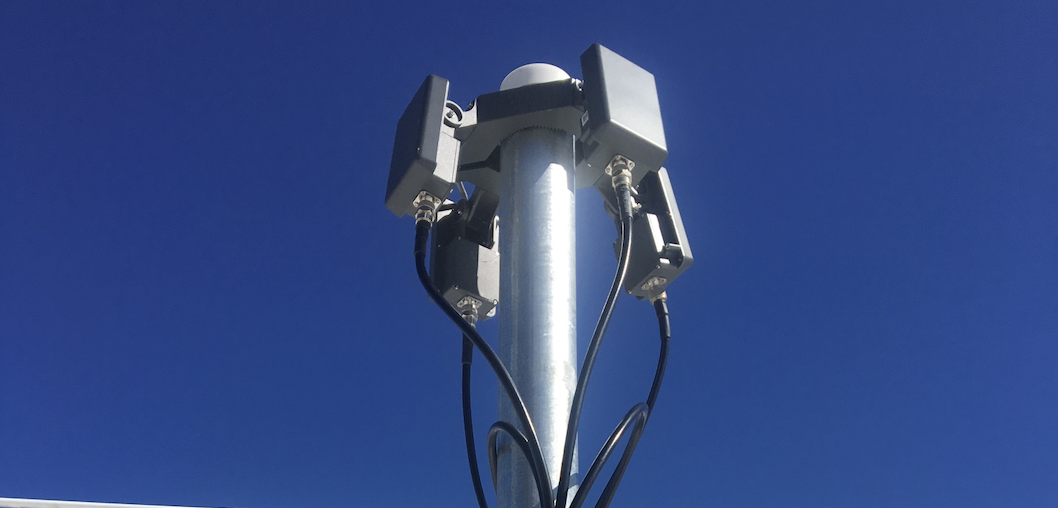
Layered sensing. Remote ID and RF sensors identify most consumer and commercial drones, and radar with a visual camera adds coverage for drones that transmit nothing. AirGuard's sensor tiers build those layers to fit each site.
-
The pilot's location. Reaching the operator is what turns a detection into a resolution. AirGuard puts the live GPS locations of the drone and its pilot on one dashboard.
-
Trained teams and clear procedures. From World Cup venues to the U.S. Open, trained teams were central to the results. AirSight provides in-depth training and 24/7 support.
-
Strong partnerships. Federal, state, and local teams worked side by side at the World Cup. AirGuard integrates with existing security platforms so information reaches every partner.
-
A complete record. Flight History and Playback preserves every incident for enforcement, reporting, and planning the next event.
Put an Anti-Drone System to Work at Your Site
The deployments above share a simple lesson: when security teams can see the drone, find the pilot, and act together, drones stop being a disruption and become a manageable part of the job. AirGuard brings that capability to stadiums, airports, prisons, police departments, and campuses, built from the sensors each site needs.
See what is flying over your site. Book a demo and ask how AirSight can show you your airspace before you commit.