In the constantly evolving landscape of correctional facility security, the threat from above is no longer theoretical—it is here, and it is sophisticated.
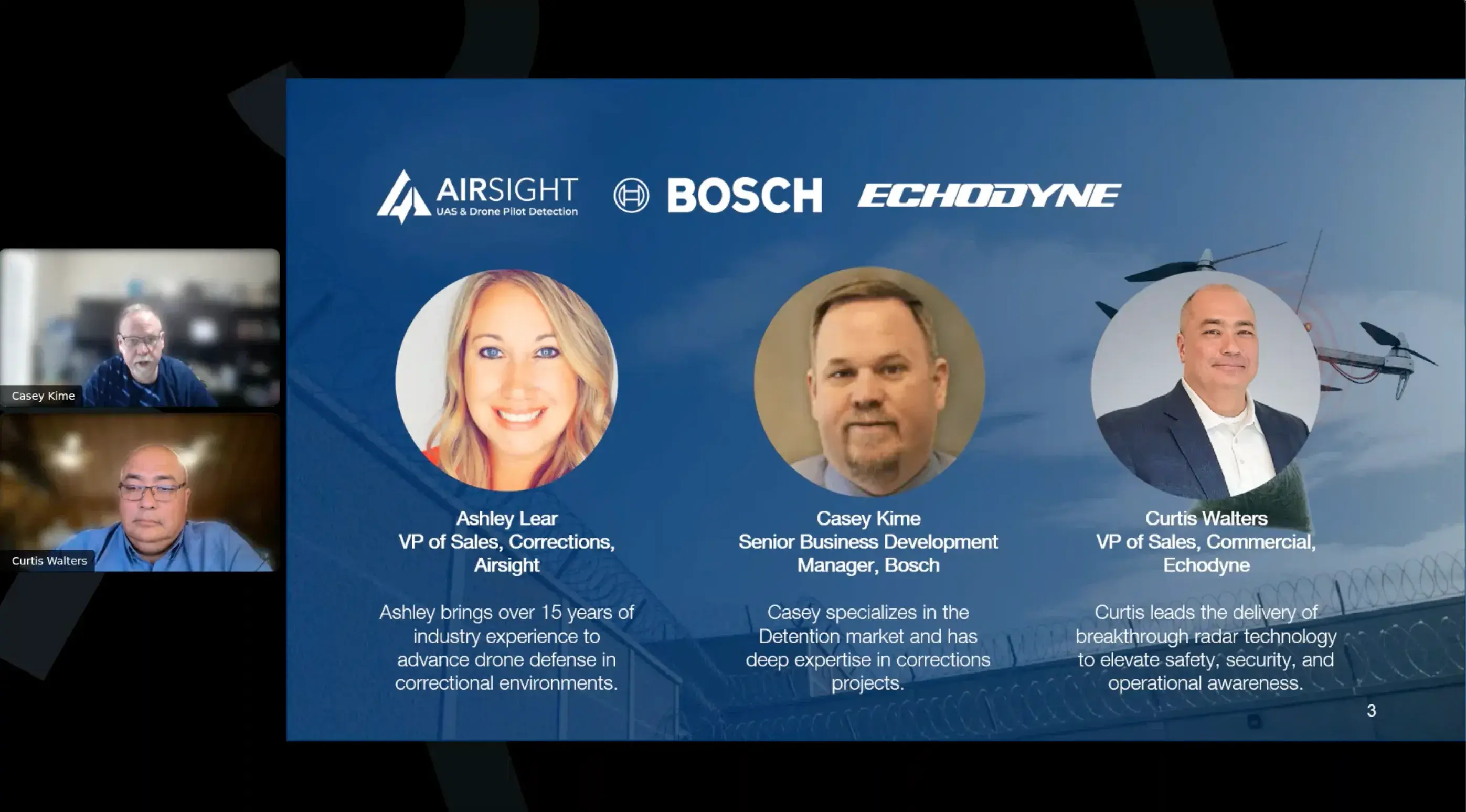
In our recent webinar, "The Overhead Threat: Practical Drone Defense for Corrections," AirSight brought together industry leaders from Bosch and Echodyne to unpack the reality of illicit drone activity and demonstrate a proven, multi-layered approach to stopping it.
If you missed the live session, here is what you need to know about the modern aerial threat and the technology designed to defeat it.
The Growing "Dark Drone" Problem
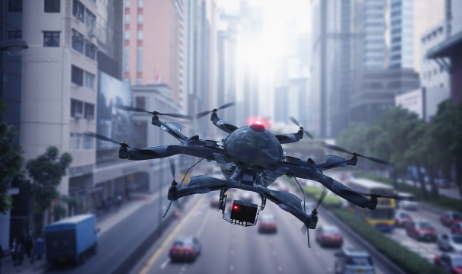
The session kicked off by defining a critical gap in many traditional security systems: the "Dark Drone." While many facilities rely on Radio Frequency (RF) detection, criminals are increasingly using drones that do not emit standard RF signals or broadcast their location. These drones can bypass standard detection methods, delivering contraband (drugs, weapons, phones) or conducting surveillance on staff and facility operations without raising an alarm.
As noted during the presentation, these aren't just random nuisance flights; they are organized, repeatable, and dangerous operations that require a more robust defense strategy.
A Multi-Layered Defense Strategy
The core takeaway from the webinar was clear: No single sensor can do it all. Effective airspace security requires a layered approach that combines the strengths of different technologies.
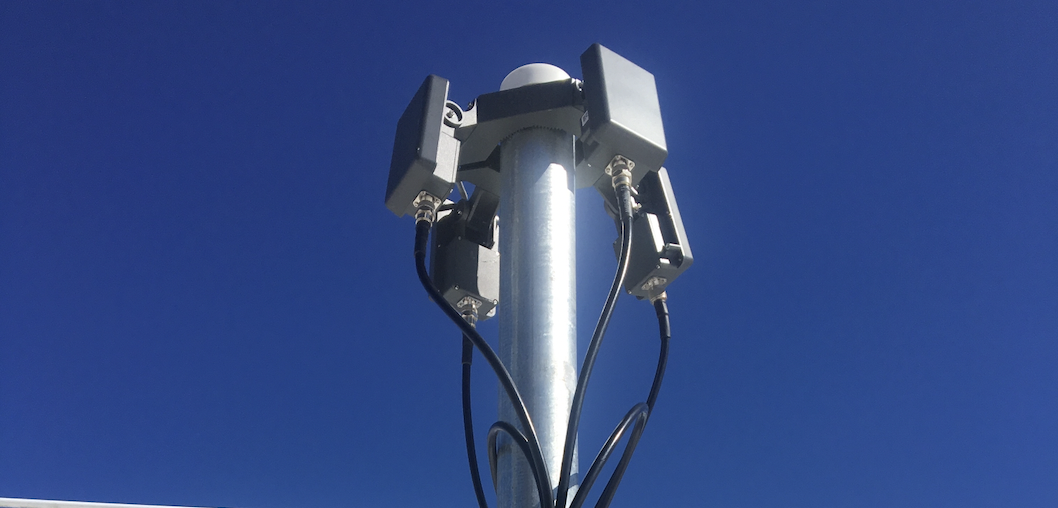
1. Early Detection with Echodyne Radar Curtis Walters from Echodyne showcased how their MESA® Radar technology serves as the "eyes" of the system. Unlike traditional sensors that struggle with small, low-flying objects, Echodyne’s radar provides precise 3D coordinates, detecting "dark drones" at long ranges regardless of weather or lighting conditions. This allows security teams to detect threats before they even reach the perimeter.
2. Visual Verification with Bosch Cameras Once a threat is detected, you need to see it to believe it. Casey Kime from Bosch demonstrated the power of the MIC IP Fusion 9000i camera. Using "slew-to-cue" automation, the camera instantly snaps to the radar's coordinates, providing high-definition optical and thermal visual verification. This step is crucial for distinguishing between a bird and a drone and for gathering forensic evidence for prosecution.
3. Actionable Intelligence with AirSight Tying it all together is AirSight’s AirGuard platform. As highlighted by Ashley Lear, AirGuard acts as the central intelligence hub, ingesting data from both the radar and cameras to provide a single, unified view of the airspace. The webinar featured a live demo of this software in action, showing how it tracks not just the drone, but also the pilot's location in real-time—giving law enforcement the actionable data they need to stop the operator.
Watch the Full Breakdown & Demo
The threat is real, but so is the solution. If you want to see exactly how these technologies integrate to create a dome of protection over correctional facilities, you can watch the full replay of the session now.