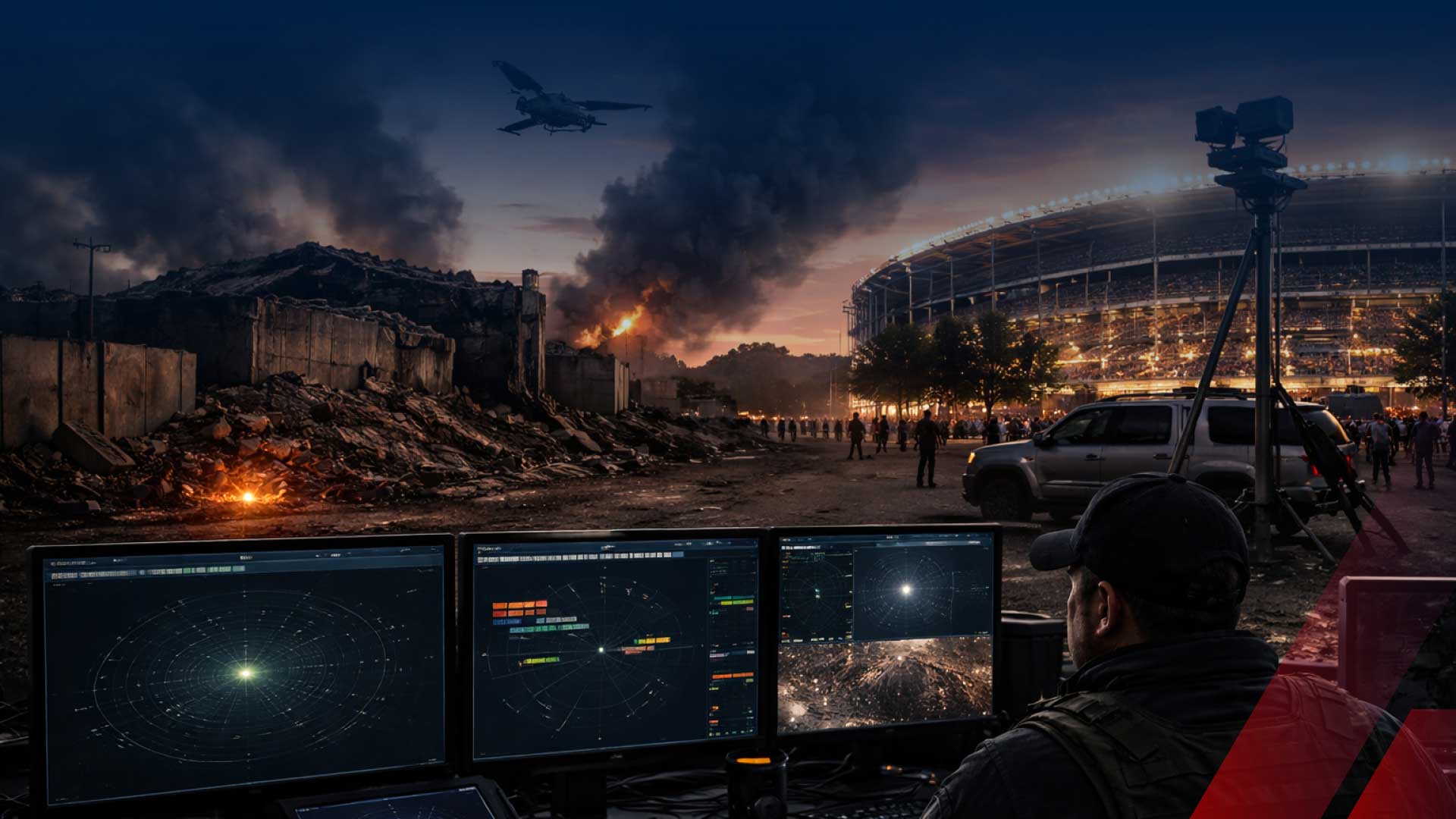
On March 1, 2026, a single one-way attack drone struck a US tactical operations center at Port Shuaiba, Kuwait, killing six American soldiers. The facility had concrete blast barriers designed to absorb car bombs and ground-level shrapnel - but nothing engineered to defeat an overhead drone threat. The drone flew at low altitude and slow speed, evading the defensive systems in place, and struck the top of the structure directly. According to military officials, the warning siren that had operated reliably all week never sounded before the impact. One service member later told CBS News: “We basically had no drone defeat capability.” This is not a theoretical scenario from a defense white paper. This is what happens when detection and command-and-control infrastructure fails against a weapon that costs less than a mid-range sedan.
We believe the operational lessons being written across the Middle East will define the counter-UAS architecture that US domestic facilities, stadiums, and critical infrastructure must adopt - not in five years, but before the FIFA World Cup kicks off this June. The $365 million in federal counter-drone funding deployed by DHS and FEMA, the SAFER SKIES Act signed into law in December 2025, and the creation of the first-ever federal office dedicated to counter-drone operations all point in the same direction: the threat is real, the timeline is now, and the detection gap exposed in Kuwait is the same gap that exists at most US venues today.
The Drone as a Precision Weapon: What Kuwait Exposed
The Iranian retaliatory strikes that followed Operation Epic Fury represented the largest real-world stress test of counter-UAS defenses in modern conflict. Within the first 24 hours, Iran launched hundreds of drones and ballistic missiles against targets across nine countries in the region, including US military installations in Kuwait, Bahrain, Saudi Arabia, Qatar, and the UAE. The scale was staggering - and the tactical sophistication of even the simplest platforms proved devastating.
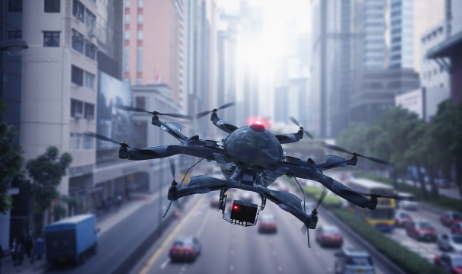
The Port Shuaiba attack demonstrated a critical vulnerability. The drone that struck the tactical operations center was a one-way attack drone, likely a Shahed-class platform, designed as a low-cost, expendable precision weapon. These platforms fly at low altitudes and slow airspeeds - profiles that confound legacy air defense systems built to track faster, higher-altitude threats. The facility’s concrete T-walls were engineered for blast mitigation from ground-level detonations, not overhead penetration. There was no counter-rocket, artillery, and mortar (C-RAM) system deployed at the port that could have engaged the incoming drone.
The economics are what make this a strategic inflection point. A Shahed-class drone costs an estimated $20,000–$50,000 to produce - orders of magnitude less than the interceptors and defense systems designed to stop them. As Anduril’s managing director for air defense, Parks Hughes, told DefenseScoop when discussing the company’s $20 billion Army contract: “The fundamental challenge of counter-UAS is detection, tracking, and then ultimately identification. Without that, you can’t really have or generate effects.” That assessment applies equally to a forward operating base in Kuwait and a stadium in Dallas.
Understanding the radar cross-section (RCS) challenge is essential here. Small commercial and attack drones present near-zero radar signatures, making them extremely difficult to detect with conventional surveillance radar. As we explored in our analysis of RCS and FPV stealth drone detection challenges, a single-sensor approach will always have blind spots. The lesson from Kuwait is unambiguous: if you cannot detect the drone before it reaches its target, no amount of physical hardening will save you.
$365 Million and Counting: The Federal Counter-UAS Mobilization
While the Iran conflict was exposing detection gaps on the battlefield, the US federal government was already mobilizing the largest domestic counter-drone investment in history - driven by a different but equally urgent timeline: the 2026 FIFA World Cup.
On January 12, 2026, the Department of Homeland Security announced the creation of a new Program Executive Office for UAS and Counter-UAS, a permanent office dedicated to rapidly procuring and deploying drone and counter-drone technologies. This is not a temporary task force. Once established, federal program executive offices do not dissolve when an event concludes - the counter-drone infrastructure being assembled for FIFA 2026 will become permanent operational capability for border security, critical infrastructure protection, and ongoing event security nationwide.
The funding architecture is layered and substantial:
- $115 million in direct DHS investment in counter-drone technologies, finalized for securing America250 celebrations and FIFA World Cup venues across 11 US cities.
- $250 million in FEMA C-UAS grants awarded to the 11 states hosting World Cup matches and the National Capital Region - the fastest non-disaster grant award in FEMA history. Texas, Florida, New York, and New Jersey are designated as Tier 1 priority states.
- $625 million in total FIFA security funding through the FIFA World Cup Grant Program (FWCGP), covering 78 US-based matches with an anticipated five million international visitors.
- $1.5 billion contract vehicle for CBP and ICE to acquire advanced counter-drone technologies on an ongoing basis, signaling the scale of sustained federal commitment beyond any single event.
- 180 days: DHS and DOJ, in coordination with DOD and DOT, must publish regulations governing counter-UAS authority for SLTT agencies, including training standards, equipment approval processes, and compliance oversight.
- Training requirement: No SLTT agency may conduct counter-UAS operations without personnel trained or scheduled for training at the FBI’s National Counter-UAS Training Center (NCUTC) in Alabama. FEMA grants require verification of this compliance.
- Authorized technology list: DHS, DOJ, DOD, and the FAA must jointly authorize the specific equipment and technology that SLTT agencies may deploy for detection and mitigation.
- Sunset clause: SLTT counter-UAS authority expires December 31, 2031 - giving agencies a six-year operational window, with annual reporting to Congress on deployments, incidents, and recommendations for expansion.
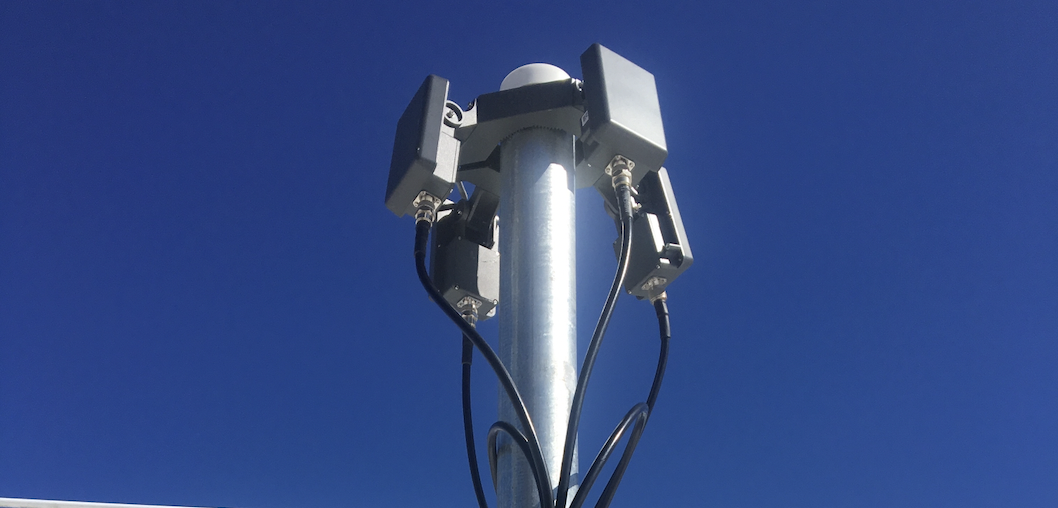
The approved equipment categories within these grants map directly to the counter-UAS kill chain: radar systems, electro-optical and infrared cameras, passive acoustic sensors, and RF monitoring platforms designed to detect, identify, track, and - where authorized - mitigate threatening drones. This is exactly the kind of multi-layered detection architecture that AirGuard delivers through a single command-and-control interface.
SAFER SKIES: The Authority That Changes Everything
Federal funding is only half the equation. The other half is legal authority - and for years, that authority was the bottleneck.
Until December 2025, the legal ability to detect and mitigate unauthorized drones was restricted almost entirely to a small group of federal agencies: DHS, DOJ, and DOD. State, local, tribal, and territorial (SLTT) law enforcement - the agencies most likely to encounter a drone threat at a prison, stadium, or critical infrastructure site - had virtually no legal pathway to act. Federal criminal law, wiretap statutes, and FAA regulations all created barriers that left local responders with their hands tied.
The SAFER SKIES Act, signed into law on December 18, 2025 as part of the FY2026 NDAA, fundamentally restructures that framework. For the first time, SLTT law enforcement and correctional agencies have a clear statutory path to detect, track, seize, disable, or destroy drones that pose a credible threat to people, facilities, or operations. The authority covers large public events, critical infrastructure, correctional facilities, and public spaces.
The implementation timeline is aggressive and specific:
The SAFER SKIES Act does not just create authority - it creates accountability. Enhanced criminal penalties now apply for using drones to commit felony offenses, smuggling contraband into detention facilities, and repeat violations of protected airspace. The US Sentencing Commission has been directed to update sentencing guidelines accordingly.
Detection-First Architecture: Why Sensors and C2 Win the Fight
The convergence of battlefield lessons, federal funding, and new legal authority all point to a single operational imperative: persistent, layered detection integrated through unified command and control.
This is not a theoretical preference - it is the architecture the federal government is validating with its largest investments. When JIATF-401 selected Anduril’s Lattice platform as the tactical C2 backbone for counter-drone operations under an $87 million initial task order, the rationale was explicit: software-defined command and control is what integrates disparate sensors and effectors into a coherent defensive posture. As Anduril’s air defense leadership stated, Lattice will “integrate a broad range of sensors and effectors from legacy systems to newly fielded capabilities, enabling distributed detection, tracking, classification, and ultimately engagement of UAS threats.”
The counter-UAS kill chain follows a defined sequence: detect, track, classify, identify, decide, mitigate. Skip any link - especially detection - and the chain breaks. Mitigation technologies like AeroVironment’s LOCUST X3 laser system or Fortem’s DroneHunter interceptor selected for the Replicator-2 initiative are powerful effectors - but they are only as effective as the detection and tracking systems feeding them target data. A laser that does not know where to point is an expensive light show.
For domestic applications governed by the SAFER SKIES Act, detection-first architecture is not just operationally superior - it is legally necessary. SLTT agencies must establish a “credible threat” determination before any mitigation action is authorized. That determination requires continuous airspace monitoring through multi-sensor fusion: radar for volumetric coverage, RF detection for drone protocol identification, Remote ID receivers for cooperative target data, and electro-optical/infrared sensors for visual confirmation. No single sensor modality can reliably detect the full spectrum of drone threats across all environmental conditions.
This is the operational challenge that AirGuard’s multi-layered detection platform was engineered to solve. By unifying radar, RF sensors, and Remote ID data into a single operating picture, AirGuard provides the persistent situational awareness that makes SAFER SKIES authority operationally viable. The platform does not just detect drones - it classifies, tracks, and presents the information security operators need to make informed threat assessments in real time, at the point of defense.
The Lesson Is Clear: Detect First, or React Too Late
The lesson from Tehran to Texas is not that we need bigger interceptors or more kinetic effectors. It is that persistent, layered detection and unified command-and-control at the point of defense is the non-negotiable foundation of any counter-UAS posture. Kuwait exposed what happens without it. The federal government has responded with unprecedented funding through FEMA and DHS, and unprecedented legal authority through the SAFER SKIES Act. The missing piece is operational deployment at scale - detection infrastructure that works 24/7 before an incident, not systems scrambled in response to one.
The timeline is unforgiving. Seventy-eight World Cup matches begin this June across 11 US cities. The SAFER SKIES implementation clock is already running. And the same class of drone that penetrated US defenses in Kuwait is commercially available to any actor with a few thousand dollars and malicious intent. Organizations that deploy layered counter-UAS detection now will define the standard. Those that wait will be building from behind.
Ready to operationalize counter-UAS detection at your facility, event, or jurisdiction? Contact our team today to schedule a demo.