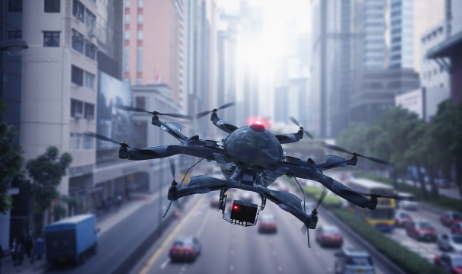
For years, RF jamming has been the go-to countermeasure for neutralizingunwanted drones. A blast of broadband noise, and the threat would ideally dropout of the sky. But in 2026, this blunt-force approach is facing a swift anddecisive obsolescence. Two critical advancements - fiber-optic tethereddrones and sophisticated waypoint autonomy - have rendered traditional RF jammers completely ineffective, demanding a fundamental shift in airspace security strategy.
The Rise of Jamming-Resistant Threats
Traditional RF jamming works by overpowering the drone's communicationlinks to its pilot or its GPS signal. However, modern drone technology hasevolved to bypass these vulnerabilities entirely.
- Fiber-Optic Tethered Drones (Immunity to RF Threats)
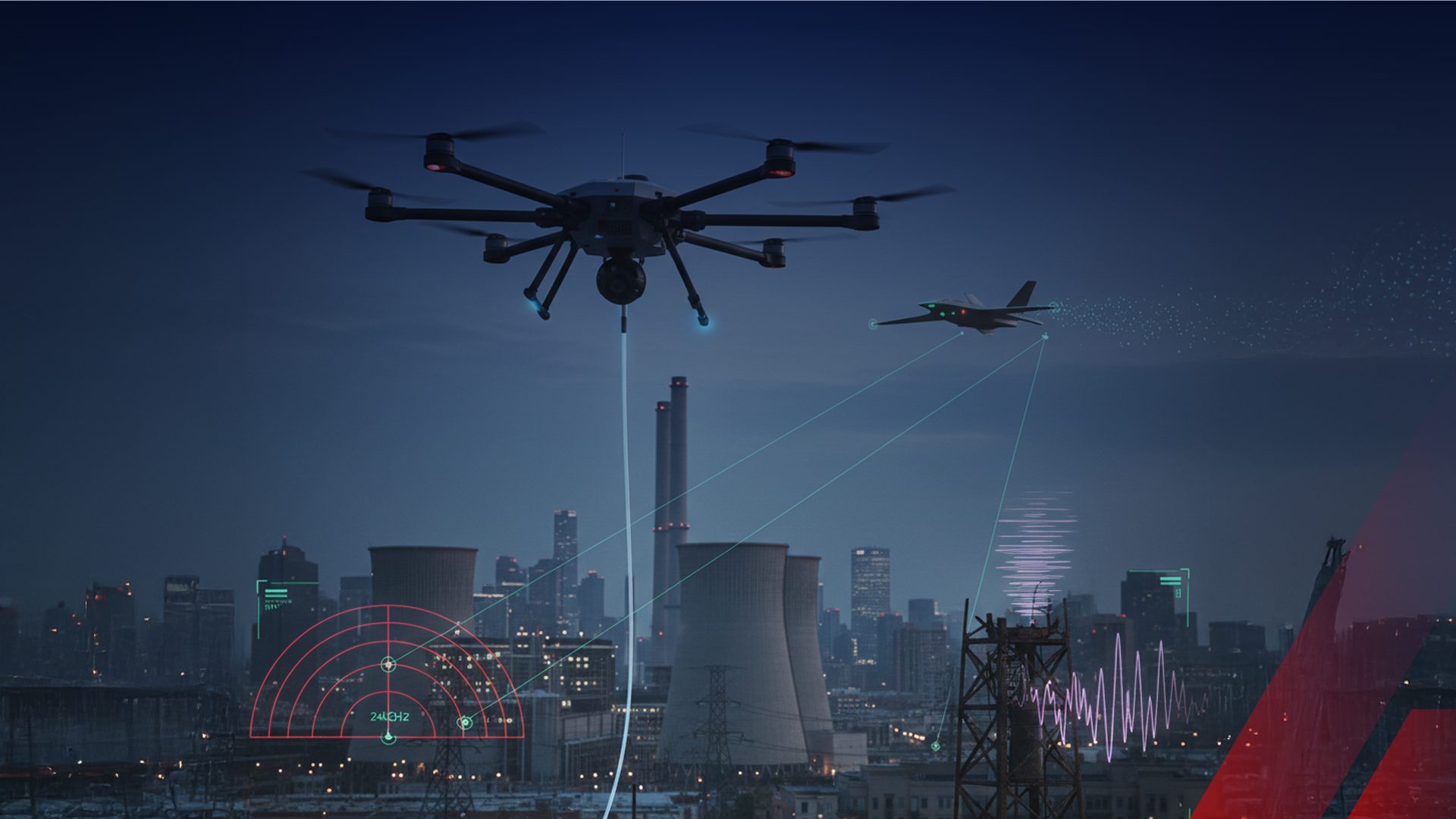
- Unjammable Communication: Tethered drones utilize a physical fiber-optic cable for all command-and-control (C2) and data transmission. This means they are inherently immune to RF jamming, as their communication signals never travel through the air.
- Persistent Surveillance: The tether also provides a continuous power supply, enabling "always-on" persistent surveillance for hours or even days, far beyond the flight time of battery-powered free-flight drones.
- Covert Operations: Because they lack RF emissions for navigation or control, tethered drones can operate with a significantly reduced electromagnetic signature, making them harder to detect with RF-only sensors.
- Examples: While often used for legitimate applications like extended security monitoring, the technology can also be repurposed by malicious actors seeking to bypass traditional defenses.
- 2026 Waypoint Autonomy (Pre-Programmed Resilience)
- GPS-Denied Navigation: Modern drones can operate with advanced inertial navigation systems (INS) and visual-inertial odometry (VIO), allowing them to follow pre-programmed waypoints even if their GPS signal is jammed or denied.
- Loss-of-Link Protocols: Sophisticated drones are designed with "loss-of-link" protocols that, instead of crashing, will continue their mission using pre-planned routes or return to a designated home point autonomously.
- Pre-Mission Intelligence: The entire mission, including target identification and payload deployment, can be uploaded and stored locally on the drone before takeoff. Jamming the C2 link during flight becomes irrelevant if the drone no longer needs real-time instructions.
- The "Flying Computer": In essence, these drones are flying computers executing a script, making them impervious to disruption once their mission is initiated.
Jamming is NoLonger a Solution
In 2026, relying on RF jamming for airspace security is akin to bringinga knife to a gunfight. Not only is it ineffective against these advancedthreats, but it also carries significant risks of collateral interferencewith legitimate communications, GPS, and critical infrastructure. The legal andpractical implications of such interference make jamming an increasinglyuntenable solution.
The shift in threat capabilities demands a proactive and platform-agnosticdetection strategy. Security teams must move beyond simply disrupting signals and focus on early detection, accurateclassification, and physical interdiction.
The Airsight Advantage
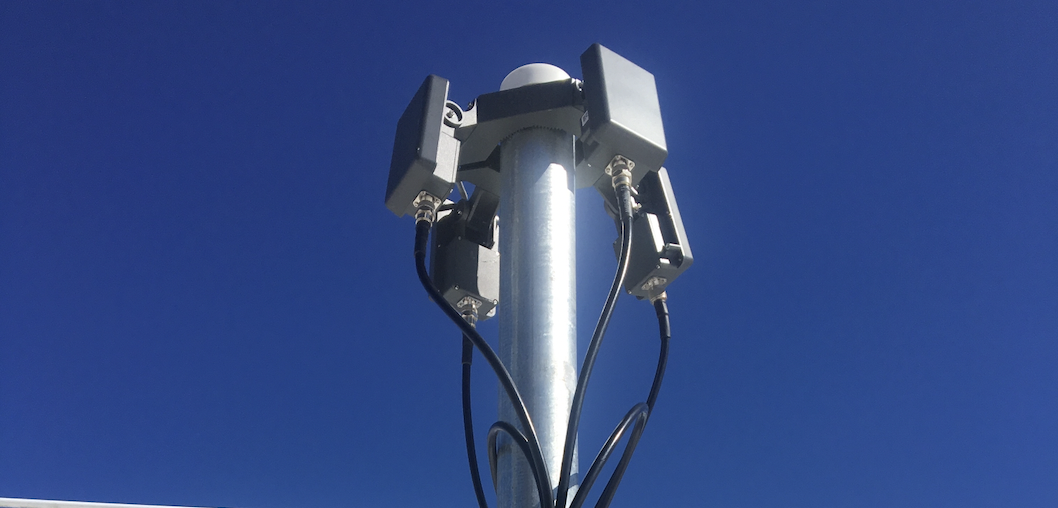
Airsight understands that the era of simple jamming is over. Our AirGuardplatform is purpose-built for the complexities of 2026 threats. By integrating 24GHz radar and advanced RF intelligence with Remote IDcapabilities, we provide a multi-layered detection system that is immune to thelimitations of jamming. We detect fiber-optic tethered drones by their physicalpresence and waypoint-autonomous threats through their initial launch andpre-programmed flight paths, enabling real-time, actionable intelligence forphysical interdiction rather than relying on obsolete countermeasures.
Airspace Security as a Data IntegrityChallenge
The current security landscape requires a shift from passive observation toactive data validation. In 2026, the proliferation of autonomous systems meansthat simple motion detection is no longer a reliable metric for safety. Adefensive posture must move beyond reactive alerts.
Airspace resilience is now achieved through amulti-sensor fusion engine that correlates physical movement with RF identityin real-time. By isolating the specific acoustic-like fingerprints of rotorswithin dense urban environments, the AirGuard architecture transforms rawsensor data into forensic-grade intelligence. This approach ensures thatcritical infrastructure is protected by high-fidelity tracking and verifieddata, rather than just movement notifications.