In complex security environments, the greatest vulnerability often lies not in the threat itself, but in the disconnect between defense systems. Against the dynamic and rapid threat posed by unmanned aerial systems (UAS), relying on isolated hardware or closed, proprietary software is a strategic risk. Security teams need unified visibility and automation.
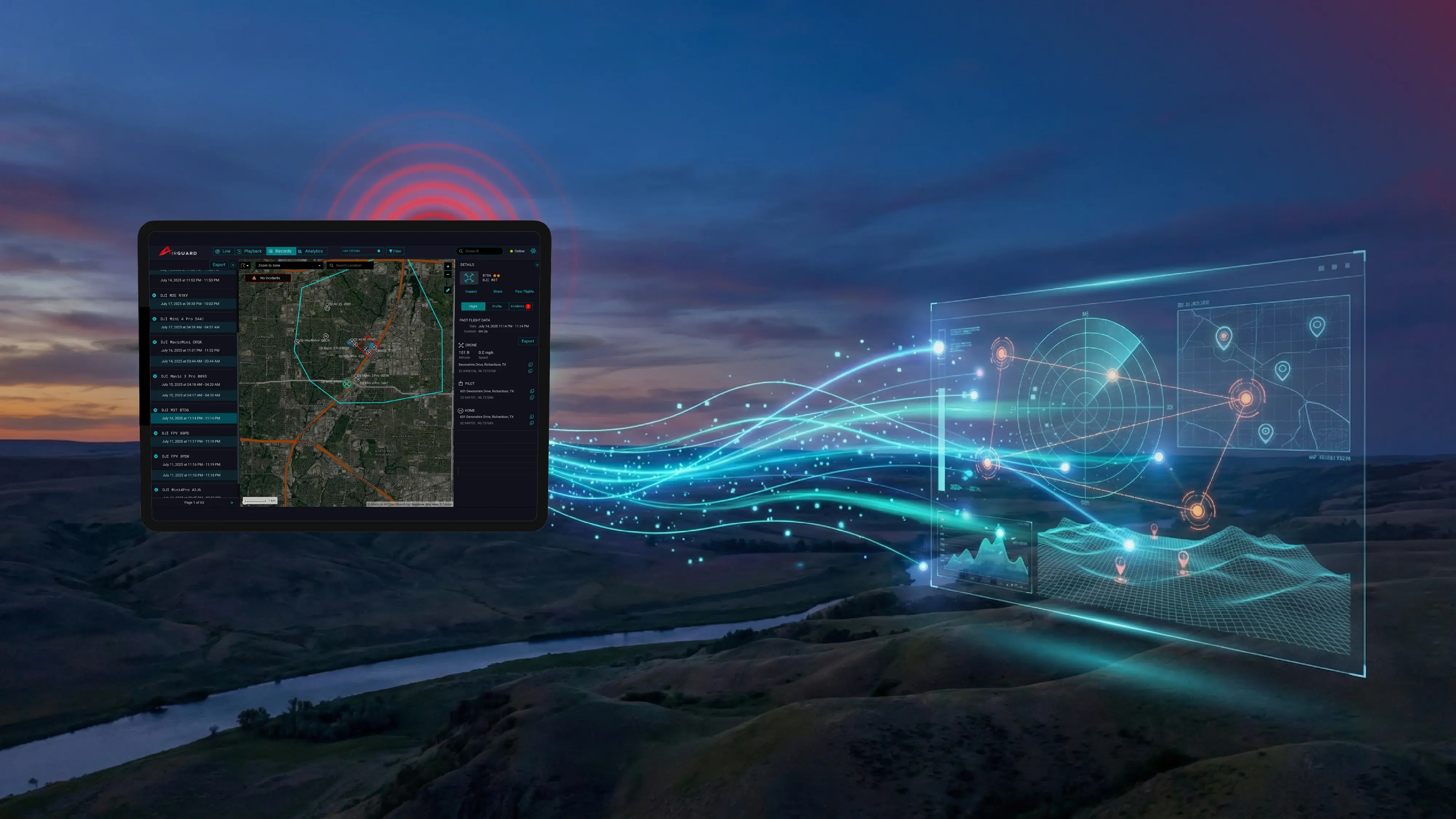
This demand for connectivity defines the next generation of airspace security. At Airsight, our drone detection solution, AirGuard, is built not just for detection, but for seamless integration, utilizing a modern, open architecture that enables it to communicate with virtually any existing platform.
The Strategic Mandate: Why Closed Systems Fail Against UAS
Traditional security software often operates within a "walled garden." When it comes to counter-UAS (C-UAS), these closed architecture systems create critical inefficiencies:
- Vendor Lock-in: Organizations are often tied to a single provider, making it costly and complicated to switch solutions or upgrade components.
- Data Silos: Detection data is trapped in a separate interface, forcing operators to manually cross-reference alerts with other security systems.
- Slow Response: A lack of standardized connectivity slows down the critical transition from "detection" to "response."
A drone detection solution built on open architecture eliminates these silos by using Application Programming Interfaces (APIs) as universal translators to ensure components and systems work together as one. This approach guarantees flexibility, scalability, and enhanced efficiency by allowing access to best-of-breed technologies without being restricted by a single vendor's product line.
AirGuard’s Open Platform: Unifying Data and Response
AirGuard’s open architecture is the key to creating a truly unified security ecosystem. It ensures that drone detection intelligence is instantly shared with every relevant system in your operational environment.
Integrating with the National Airspace (ADS-B)
The first step in effective airspace management is differentiating between friendly, authorized manned aircraft and unauthorized drones. AirGuard achieves this by integrating with fundamental aviation data sources, such as the Automatic Dependent Surveillance–Broadcast (ADS-B) database.
By pulling ADS-B data, our drone detection solution can filter out authorized fixed-wing and helicopter traffic. This integration is crucial for enhancing situational awareness and safety for all platforms operating in shared airspace.
Active Response Connectivity
The system is built to feed real-time coordinates to response systems. The software is designed to communicate the drone's GPS coordinates to a Jammer or an Interceptor to neutralize the drone threat, provided these options are legal by government agencies.
The Pillars of Actionable Intelligence
Detection and integration are meaningless unless the output is clear and empowers a timely security response. AirGuard focuses on turning raw data into actionable intelligence through specialized workflow features:
- Intelligent Data Fusion: The solution uses an intelligent fusion engine to process incoming data from disparate sensors (RF, radar, video), which is crucial for reducing cognitive load on operators and allowing for rapid threat prioritization.
- Automated Classification: AI and machine learning are leveraged to automatically classify aerial objects, differentiating drones from birds and assessing threat severity in real-time. This reduces false alerts and allows operators to focus on incidents that genuinely matter.
- Unified Security Ecosystem: An open architecture is essential for connecting C-UAS systems to the broader security ecosystem—such as Physical Security Information Management (PSIM) platforms and Video Management Systems (VMS). This allows for a modular architecture that supports automation, such as automatically cueing PTZ cameras to visually track targets.
Future-Proofing Your Drone Detection Solution
Choosing a drone detection solution with an open architecture is an investment not just in today's security, but in tomorrow's adaptability. This approach ensures scalability and resilience, which is crucial as threats and regulations continuously evolve.
- An open integration framework allows for the easy incorporation of new technologies, sensors, and data sources, allowing the system to adapt to evolving threats without major overhauls.
- This vendor-agnostic approach protects your infrastructure from dependence on one platform, which is key to future-proofing your operations and remaining competitive.
Securing Your Airspace with Confidence
The drone threat is not a theoretical future problem; it is a present reality that demands a sophisticated response. Implementing a comprehensive and intelligent drone detection solution is the most effective way to address this challenge head-on. By gaining clear oversight of your airspace, you can move from a state of vulnerability to a position of strength, ensuring your operations and assets remain secure.
Airsight is committed to empowering organizations with the tools and expertise needed to meet this challenge head-on. Proactive airspace security is the cornerstone of modern defense. To learn how AirSight’s open platform can integrate with your existing security ecosystem.