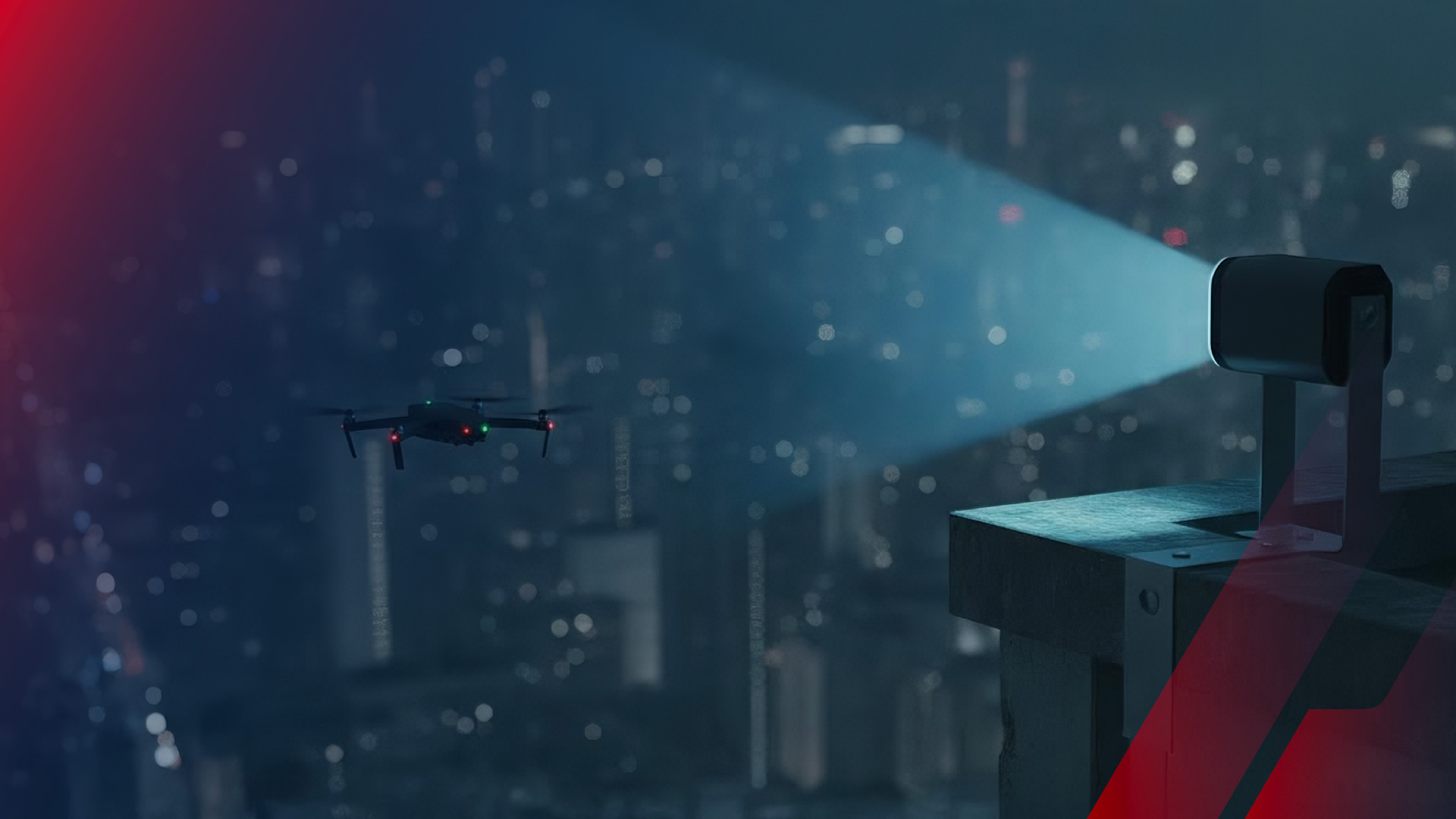
As the density of low-altitude drone traffic increases in 2026, the technical requirements for short-range tracking have shifted from simple "detection" to high-definition isolation. Traditional radar systems often struggle in urban "canyons" where signal multipath and clutter are high.
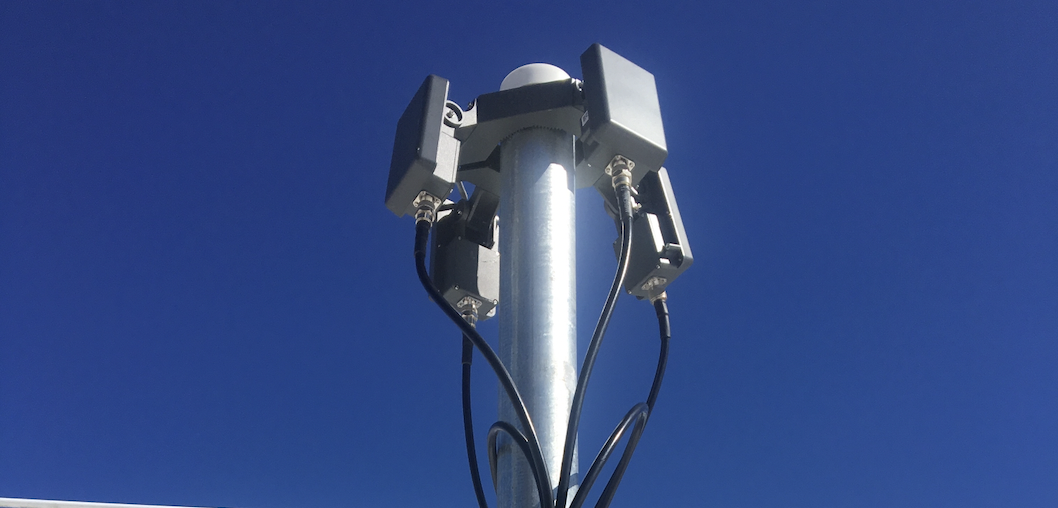
The industry solution is the move toward 24 GHz CMOS-integrated radar utilizing Hybrid Beamforming. This architecture provides the precision of high-end military arrays at a scale—and price point—suitable for widespread critical infrastructure protection.
The CMOS Revolution: Integration at Scale
The shift to Complementary Metal-Oxide-Semiconductor (CMOS) technology allows for the "System-on-Chip" (SoC) approach, integrating the RF front-end and digital processing on a single silicon substrate.
- The Advantage: Modern CMOS processes allow for lower noise floors and higher integration density, which is essential for detecting the weak backscatter of low-RCS (Radar Cross Section) drones.
- The Scalability: CMOS enables the cost-effective production of the large-scale antenna arrays required for Massive MIMO, the backbone of high-resolution spatial tracking.
Understanding Hybrid Beamforming: The Middle Path
In 2026, Hybrid Beamforming has emerged as the superior middle ground between Analog and Digital methods, specifically for millimeter-wave systems.
- Analog Sub-Arrays: The system uses analog phase shifters to steer the "main" beam. This provides high gain and long-range visibility with significantly lower power consumption than fully digital arrays.
- Digital Processing: A digital backend processes multiple signals simultaneously, allowing the radar to track dozens of small, fast-moving targets (like a swarm of FPV drones) within that main beam.
- Superior Clutter Rejection: This allows the radar to maintain a high link budget while creating "nulls" to cancel out ground clutter, a critical requirement for urban drone surveillance.
Why 24 GHz is the "Sweet Spot”
While 77 GHz is common for automotive safety, the 24 GHz Industrial, Scientific, and Medical (ISM) band offers distinct advantages for dedicated airspace security:
- Atmospheric Resilience: 24 GHz signals suffer less attenuation from heavy rain or fog compared to higher-frequency bands.
- Velocity Unambiguity: Lower carrier frequencies allow for a higher "unambiguous velocity" limit, making it easier to track high-speed FPV drones without signal aliasing.
The Technical Verdict: The Future of sUAV Defense
The transition to CMOS-integrated 24 GHz radar represents a democratization of advanced airspace defense. By combining the cost-efficiency of silicon integration with the spatial precision of Hybrid Beamforming, security teams can now deploy "dense" sensor meshes.
The Airsight Advantage
Airsight leverages high-resolution 24 GHz sensing within a multi-layered ecosystem. By utilizing Hybrid Beamforming, we ensure that your security infrastructure provides the surgical spatial resolution needed to distinguish a drone from a nearby building or swaying tree, even in complex urban environments.
Airspace Security as a Data Integrity Challenge
In 2026, the primary challenge of counter-UAS operations is establishing intent and identity in cluttered environments. As the industry moves toward autonomous threats, the reliance on simple velocity data is a tactical vulnerability. Modern airspace resilience requires the fusion of high-frequency sensing, RF intelligence, and AI-driven classification.