Drones Over Your Property? The Legal Way to Respond in the US
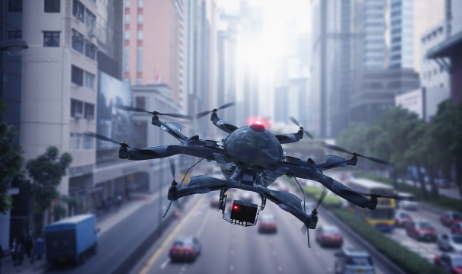
A drone hovering over your backyard feels like a violation, and the instinct to do something about it is strong. But what you are actually allowed to do is narrower than most property owners expect, and the wrong move carries federal criminal exposure. This guide lays out what is legal, what is not, and the one response that resolves the problem without putting you at risk.
You have a drone problem, and you want it gone. The short version: you cannot lawfully shoot it down, jam it, or knock it out of the air, but you can detect it, document it, and build the case that gets it stopped. Knowing which drone is in your airspace, and being able to prove it, is the legal foundation everything else rests on.
Is it legal for a drone to fly over my house?
In most cases, yes. A drone may fly over your home as long as the operator follows the Federal Aviation Administration's rules for Unmanned Aircraft Systems. Recreational and most commercial flights operate in uncontrolled airspace below 400 feet, during the conditions the FAA sets out in its guidance for the public. The FAA holds exclusive authority over the national airspace, so when an operator flies within those rules, the flight over your property is generally lawful.
The key point property owners miss: your land rights do not extend upward into navigable airspace in a way that lets you control or remove an aircraft. That single fact governs every option below.
There are exceptions. Drones are restricted around airports, stadiums during events, government facilities, and other temporary or permanent flight-restricted zones. Where state privacy law applies, using a drone to record you where you have a reasonable expectation of privacy can be unlawful even when the flight itself is FAA-compliant.
Can I shoot down or disable a drone over my property?
No. This is the most dangerous misconception in the entire topic. Under federal law, drones are aircraft, and willfully damaging, destroying, or disabling an aircraft is a federal offense under the Aircraft Sabotage Act, 18 U.S.C. 32, which carries a statutory maximum of up to 20 years in prison. In practice, most incidents are charged at the state or local level, but the federal exposure is real: a Florida man who shot down a sheriff's office drone faced up to 10 years in federal prison.
"Shooting down" is not the only prohibited act. Jamming the control signal, spoofing its GPS, netting it, or aiming a laser at it are all treated as unlawful interference with an aircraft for private citizens, and several also violate separate federal communications and aviation statutes. A drone jammer disrupts the radio link between the drone and its operator; a spoofer feeds the drone a false signal to mislead it. They are different techniques, and for non-federal users in the US, both are illegal.
Who can actually take a drone down?
Active drone mitigation in the US is reserved for specific federal agencies, under strict limits. In a joint advisory, the Department of Justice, FAA, DHS, and FCC told non-federal public and private entities plainly that detection and tracking are broadly permissible, while active interference such as jamming, seizing, or disabling a drone is tightly restricted. The FAA does not support the use of mitigation systems by any entity without express authority from Congress.
The practical takeaway for a homeowner, business, or facility: mitigation is off the table for you, but detection is not. The legal path forward runs entirely through knowing and documenting what is in your airspace, not through removing it yourself.
What are the legal ways to stop a drone over your house?
You cannot force a drone down, but you do have lawful steps that work, especially when you can back them with evidence:
- Detect and document the activity. A record of when, where, and how often a drone enters your airspace is what turns a vague complaint into an actionable one. This is the single most useful thing you can do, because every option below depends on evidence.
- Ask the operator to stop. Because pilots must keep the drone within visual line of sight, the operator is usually nearby. Many hobbyists do not realize they are causing alarm and will move on when asked, though they are not legally required to.
- File an FAA complaint for rule violations. If the drone flies above 400 feet, at night without authorization, or otherwise breaks FAA rules, report it to your local FAA Flight Standards District Office with the evidence you have gathered.
- Call local law enforcement. If a drone is operated recklessly, causes damage or injury, or appears to violate your state's privacy or harassment laws, contact police. State privacy statutes, not federal aviation rules, are often the strongest lever for a property owner.
- Support local and state legislation. Drone privacy rules are largely set at the state level. Contacting your representatives is a legitimate way to push for clearer protections over residential property.
What ties these together is the same thing: proof. A drone you can detect and document is a drone you can act against through legal channels. A drone you only glimpse is one nobody can help you with.
How drone detection fits in
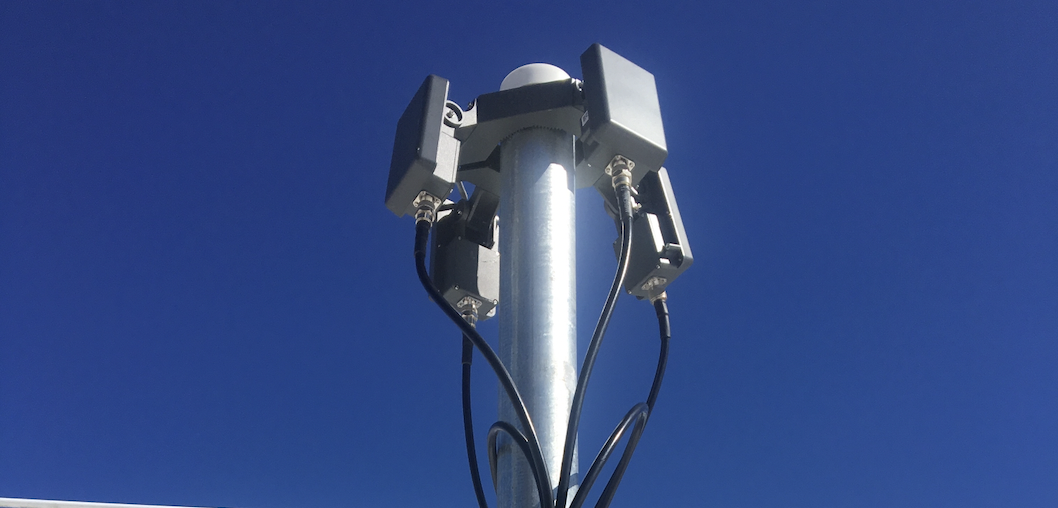
Because mitigation is reserved for federal agencies, detection is the lawful core of any private response. Knowing what is in your airspace, when it arrives, and where it goes is exactly the evidence the FAA, law enforcement, and your own next steps depend on. AirGuard unifies radar, RF sensors, and Remote ID into a single operating picture, so instead of a hundred uncertain glimpses you get one verified alert you can act on. For homes, businesses, and critical sites alike, that verified record is what converts a frustrating situation into a documented, legally actionable one.
Understanding the rules is the first step. Being able to prove what is happening in your airspace is the one that holds up.
Want to see what is actually in your airspace? Schedule a demo of AirGuard today.