
Correctional Facility Security
Prison Drone Detection
Stop contraband drone drops before they reach the yard. AirGuard detects drones and locates their pilots in real time, integrates with your existing security systems, and documents every incursion as court-ready evidence.
Trusted across corrections, law enforcement & public safety
organizations protected nationwide
state corrections & state police agencies served
live monitoring behind every deployment
The Threat to Corrections
Why Prisons & Correctional Facilities Need Drone Detection
Correctional facilities face a growing threat from drones used to smuggle contraband — drugs, weapons, cell phones, and other illicit materials — into prison yards and high-security zones. Traditional perimeter security was never built to detect aerial intrusions, leaving facilities exposed to unauthorized drone activity.
Contraband Smuggling & Criminal Coordination
Drones deliver drugs, phones, and weapons over the fence, letting inmates coordinate with outside criminal networks and undermining facility security.
Learn MoreSurveillance & Escape Planning
Unauthorized drones gather intelligence on prison layouts, security patrols, and weak points — aiding escape attempts and criminal coordination.
Learn MoreCompromised Officer & Staff Safety
Drones carrying weapons or surveillance equipment threaten correctional officers, jeopardizing the safety of both staff and inmates.
Learn MoreLegal & Compliance Risks
Failure to prevent drone intrusions can result in security breaches, lawsuits, and violations of state and federal regulations.
Learn MoreHow AirGuard Works
How AirSight Secures Correctional Facilities
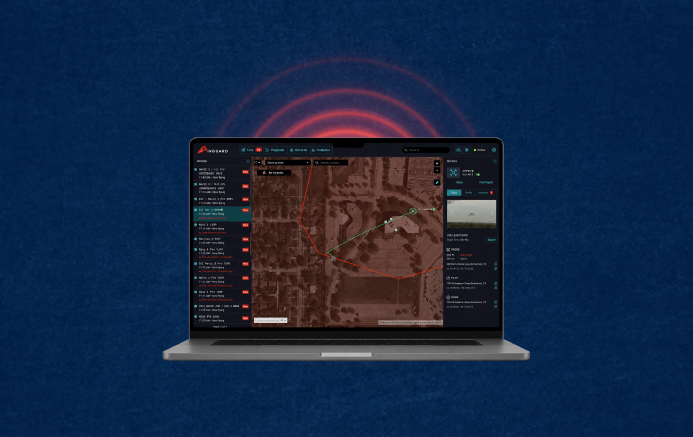
A multi-layered system — Remote ID, RF/DF detection, radar, and video — tracks drone flights, locates the pilots, and integrates with the security infrastructure your facility already runs.
24/7 Airspace Monitoring
Provides the drone's make, model, speed, altitude, and GPS — along with the pilot's real-time location.
Non-Signal "Dark Drone" Radar Tracking
Radar with AI classification identifies drones that don't emit standard RF signals, catching the UAVs that bypass conventional detection.
Human-Verified Alerts
A 24/7 monitoring team verifies every detection, so officers are alerted to real, confirmed drone threats — not false alarms.
Full Security-System Integration
Connects with existing surveillance cameras, alarms, access control, and rapid-response teams for seamless coordination.
The Airsight Advantage
AirGuard: Best-in-Class Drone Detection for Prisons
Detection, classification, and pilot location in one open-architecture platform — built to give correctional security teams actionable intelligence and court-ready evidence.
Drone Identification & Classification
Instantly detect and classify drones, with drone-type alerts in Layer 1 notifications to help teams prioritize threats faster.
Drone & Pilot Location
Pinpoint GPS and Wi-Fi coordinates of both the drone and its operator — the key to making arrests and stopping repeat offenders.
Altitude & Position Tracking
Monitor altitude, latitude, and longitude with map-based visibility and a Zoom-to-Zone feature for your custom alert zones.
Court-Ready Evidence
Live and playback tracking captures and retains drone flight history for use as digital evidence in prosecutions.
Speed Analysis & Trends
Monitor drone velocity and analyze activity trends over 120 days to map recurring smuggling patterns at your facility.
24/7 Live Threat Monitoring
Precise, real-time alerts on genuine drone threats, filtered by a live human monitoring team to eliminate false alarms.
Integrations
From Detection to Response — In One Connected Workflow
Detection is only the first step. Because AirGuard is built on an open architecture, it connects the moment a drone is detected to a coordinated response — integrating with a wide range of best-in-class partners across each category rather than locking you into one vendor. Below are two of our announced integrations as examples of what that makes possible.
Automated Aerial Response with Nightingale
A detection shouldn’t wait for a human to scramble a response. Our integration with Nightingale is one example of a Drone-as-First-Responder workflow the open architecture supports: a confirmed drone over your facility automatically launches a robotic aerial responder — putting eyes on the threat and the pilot within seconds.
Watch the live demo-
1
Detect
AirGuard detects the rogue drone and triangulates the pilot’s GPS location.
-
2
Deploy
The Nightingale “Blackbird” drone launches automatically from its base station.
-
3
Pursue
The security drone flies autonomously to the pilot’s coordinates — no manual piloting required.
-
4
Verify
Security teams get instant live video verification of the threat.
Pilot-to-Plate: From Airspace to Roadway
Our partnership with Flock is one example of an LPR integration the open architecture supports. AirGuard pushes a real-time data feed into FlockOS, the public-safety operating system used by thousands of agencies — so airspace detections and the operator’s location appear on the same map agencies already use for Flock’s license-plate reader (LPR) and video data. When detection and the LPR network share one picture, the time from spotting a drone to identifying its operator shrinks from hours to minutes.
- Real-time airspace detections appear as live assets in the FlockOS map.
- Pilot-to-Plate correlates the operator’s location with vehicles captured by Flock’s LPR cameras near the launch site.
- A roadway-level chain of evidence turns cases that once ended at the fence line into a named suspect and a vehicle.
Public Case · March 2026
The Grant Parish Smuggling Bust
When a drone tried to fly contraband — concealed inside hollowed-out plastic crow decoys — onto the grounds of a federal correctional complex in Grant Parish, Louisiana, AirSight’s detection identified the unauthorized drone the moment it entered protected airspace and surfaced the operator’s location. With that intelligence, the Grant Parish Sheriff’s Office identified and arrested the two operators, who admitted to being paid $40,000 for the run.
“With drone detection we now know when there’s a drone there and where the pilot is… Before these two solutions, we simply had to get lucky.”
Sheriff Steven McCain
Grant Parish Sheriff’s Office
Read the full story & partnershipATAK Integration
Live drone and pilot telemetry feeds directly into Android Team Awareness Kit, putting real-time airspace data in the hands of officers and ground teams in the field.
VMS & PTZ Cameras
AirGuard hands detected-drone GPS and altitude to your Video Management System and PTZ cameras for automatic tracking and visual confirmation.
RTCC & EOC
Streams live drone-threat data into Real-Time Crime Center and Emergency Operations Center dashboards for coordinated, multi-agency response.
ADS-B Aircraft Data
Fuses live airplane and helicopter flight data into the map for situational context and to distinguish crewed aircraft from drones.
Cloud Data & Analytics
AWS-powered analysis for historical trend mapping, predictive insight, and identifying recurring drop zones at your facility.
Open-Architecture Sensors
Best-in-class radar, RF, and Remote ID hardware from validated partners, unified into one interface with no single-vendor lock-in.
These represent the categories AirGuard integrates across — not a fixed list. Because the platform is vendor-neutral, we can connect the partners and systems your facility already runs, or add new ones as your needs evolve.
Proven in the Field
Trusted to Protect High-Stakes Environments
AirSight's technology is deployed by more than 100 organizations across the country — including state corrections departments, state police, and the nation's largest public events.
Organizations Protected
AirGuard is deployed across more than 100 organizations nationwide — including correctional facilities, state agencies, and major public venues.
In Contraband Intercepted
AirSight’s real-time tracking technology has helped capture more than $40 million in contraband nationwide — detecting drops, tracking flights, and locating the operators behind them.
For the security of the facilities we protect, AirSight does not publicly name correctional clients. Details of specific deployments are shared confidentially under NDA.
Super Bowl LIX
Contracted by the Louisiana State Police to provide comprehensive airspace security at the Caesars Superdome in New Orleans — monitoring a 5-mile radius, enforcing airspace restrictions, and safeguarding more than 65,000 attendees from potential aerial threats.
St. Jude Golf Tournament
Provided drone detection capabilities in partnership with the Shelby County Sheriff’s Office, securing the airspace over a major professional sporting event.
2025 Innovation Award
Recognized as a winner in the D CEO & Dallas Innovates 2025 Innovation Awards, and featured in Correctional News for helping the corrections industry combat rising aerial threats.
View the award“Louisiana State Police valued our partnership with AirSight throughout the Super Bowl LIX public safety deployment. The sUAS technology was a force multiplier, increasing LSP’s ability to respond to potential threats and ensure a safe environment for our residents and visitors.”

Lt. Mindi Machauer Keith
Trooper, Louisiana State Police
The Threat Landscape
Contraband Drone Drops Are a Nationwide Problem
Across the country, correctional facilities are being targeted from the air — and the ones that catch the pilots are the ones with eyes on their airspace. The pattern is consistent:
Surging contraband seizures
Some state systems have reported confiscated prison cellphones doubling within a few years, as drones — some capable of carrying payloads of up to 200 pounds — deliver drugs, phones, and weapons over the fence.
Heavier payloads, bolder drops
Modern drones can carry large, repeated loads of contraband — cellphones, narcotics, tobacco, and even weapons — bypassing fences, patrols, and traditional perimeter security entirely.
Pilots located & prosecuted
In multiple states, operators who used drones to drop contraband into prisons have been arrested and sentenced — but only where authorities could detect the drone and locate the pilot in time.
The same sites, targeted again
Facilities without detection are hit repeatedly, often by the same operators. Visibility into the airspace — and the pilot's location — is what breaks the cycle.
Questions, Answered
Prison Drone Detection: FAQ
Common questions from correctional administrators and security teams about detecting and responding to contraband drones.
Detection is the foundation of stopping contraband drops. AirGuard alerts officers the moment a drone approaches the facility, tracks its flight path and drop location, and pinpoints the pilot's position — so staff can recover the package, respond in real time, and give law enforcement what they need to locate and arrest the operator. Across the country, the facilities making arrests are the ones that can see the drone and locate the pilot.
No. Flying a drone over a correctional facility is prohibited. Many states have made it a specific criminal offense to operate a drone over or near a prison, and using one to deliver contraband carries serious federal and state penalties. The FAA has also established airspace restrictions over numerous correctional facilities. Despite these rules, unauthorized flights happen constantly — which is why detection matters: AirGuard identifies the drone the moment it enters protected airspace and locates the operator so the violation can be acted on.
Yes. Radar is a key layer for prison drone detection because most contraband drops use drones that can be flown on non-standard frequencies or with their signals disabled. Radar with AI classification detects these "dark drones" by their physical movement rather than any broadcast signal, distinguishing them from birds and clutter. AirGuard fuses radar with Remote ID, RF detection, and camera verification — and a 24/7 human monitoring team verifies every alert — so the system catches both signal-emitting and silent drones approaching the facility and reports each drone's make, model, speed, altitude, and GPS location along with the operator's position.
Yes — and for corrections this is the decisive capability. AirGuard pinpoints the GPS and Wi-Fi coordinates of both the drone and its operator. Locating the pilot is what turns a detected drop into an arrest and a prosecution, and it deters repeat offenders who would otherwise keep targeting the same facility.
Yes. Because AirGuard is built on an open architecture, it integrates with the surveillance cameras, alarms, access control, and incident-management systems your facility already runs. It can hand detected-drone GPS and altitude data to PTZ cameras for visual confirmation, and connect with Real-Time Crime Center and Emergency Operations Center platforms for coordinated response — so your team works from one interface.
Yes. AirGuard's live and playback tracking captures and retains drone flight history, which can be used as digital evidence in legal cases. Detailed records of the drone's flight path, timing, and the pilot's location support prosecutions and have contributed to arrests and sentencing in multiple states.
Airsight is a vendor-neutral validator that stress-tests detection equipment from global vendors and integrates only what proves reliable into the AirGuard platform — eliminating single-vendor lock-in. Its technology is trusted by more than 100 organizations, including state corrections departments and state police, and is backed by a 24/7 expert monitoring team that verifies alerts so officers respond only to confirmed threats.
Stop the Next Drone Drop
See what's flying over your facility and where the pilots are standing. Book a demo or take our airspace detection solution for a spin before committing to a permanent system.