
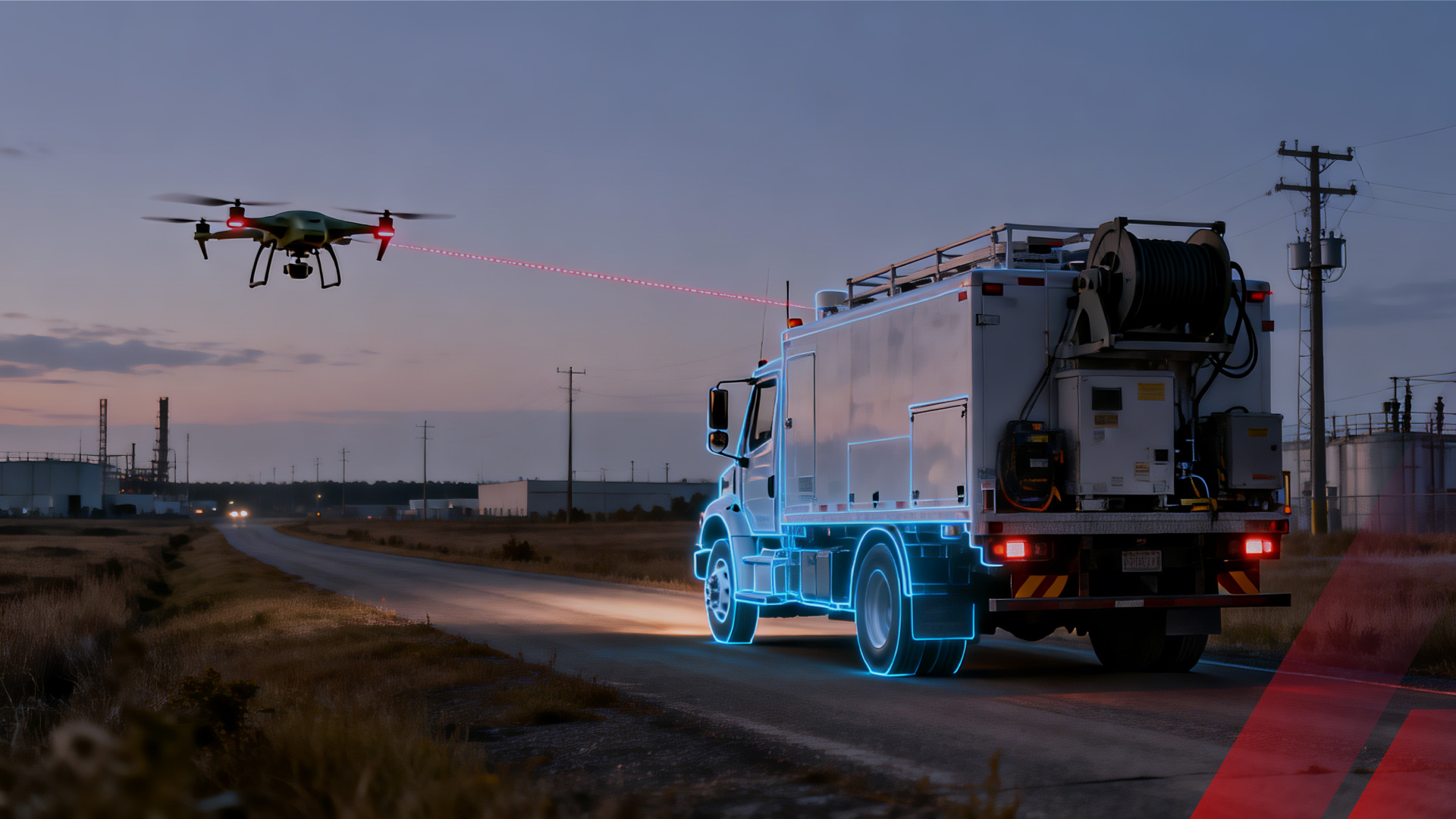
On February 12, 2026, a targeted UAV strike destroyed a mobile energy repair tower operated by DTEK Donetsk Electric Grids as the crew was in transit to carry out infrastructure restoration. The incident, which occurred during a high-tempo period of aerial attacks across the region, underscores the lethal risks faced by utility workers operating in frontline and border areas.
Incident Analysis: The Targeting of Mobile Infrastructure
According to official reports from DTEK, the brigade was moving between cities when their specialized mobile tower was struck by a Russian UAV.
- Operational Damage: The vehicle and the integrated tower were completely consumed by fire and are beyond repair (Mezha).
- Casualties: Fortunately, no injuries were reported among the energy workers, though the loss of equipment further complicates power restoration for civilians in the Donetsk region (DTEK Media).
- Regional Context: This strike coincided with a broader surge in drone and missile activity. On the same day, nearly 219 drones and 24 ballistic missiles were launched across Ukraine, targeting critical substations and thermal power plants in Kyiv, Odesa, and Dnipro (Kyiv Independent).
Legal and Forensic Implications
The DTEK Press Service has formally notified the National Police of Ukraine, documenting the attack as a deliberate criminal offense. The incident is being investigated under two specific articles of the Criminal Code of Ukraine:
- Article 345: Threat or violence against a law enforcement officer or official performing public duties (Justice.gov).
- Article 194: Deliberate destruction or damage to property (Unodc).
The systematic nature of these strikes suggests that utility crews are being actively tracked via UAV cameras during daylight hours, leaving littledoubt regarding the civilian nature of the targets (UNDOCS).
Securing Critical Utility Transit
The February 12 strike highlights a critical vulnerability: the lack of persistent, mobile drone detection for repair brigades in transit. Relying on stationary defense at power plants is no longer sufficient when crews are targeted in "blind spots" between cities.
Airspace resilience for the energy sector now requires a shift toward Mobile Detection-as-a-Service. Protecting these vital "lifeline" workers requires a multi-sensor fusion engine - combining high-frequency radar and RF intelligence - that can be deployed on transit vehicles to provide early warning of loitering munitions before they can reach their target.
The Airsight Advantage
Airsight provides the forensic-grade technical architecture needed to protect mobile high-value assets in contested environments. Our AirGuard platform utilizes passive detection and 24 GHz radar to isolate micro-motions, allowing security teams to verify threats with high-fidelity accuracy. By integrating Remote ID and RF intelligence, we provide a transparent, multi-layered view of the airspace that allows energy infrastructure - and the workers who maintain it - to remain secure in an era of persistent UAV threats.