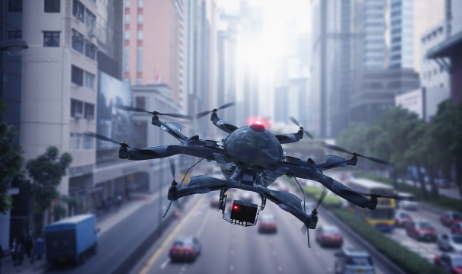
The nature of conflict has changed. As the world watches the devastating efficiency of drone warfare in Ukraine and the Middle East, the implications for domestic airspace security have become impossible to ignore. What was once the exclusive domain of high-tech militaries is now a landscape dominated by low-cost, high-impact "autonomous warriors."
We believe that the lessons learned on the battlefield today will dictate the security protocols of tomorrow. To secure our critical infrastructure and public spaces, we must understand how these global shifts are fundamentally altering the threat profile here at home.
The Death of Traditional Air Superiority
For decades, air superiority was defined by multimillion-dollar jets and sophisticated missile defense systems. The war in Ukraine has shattered that paradigm. Cheap, "one-way" attack drones—often costing less than $35,000—are successfully neutralizing targets worth millions.
This creates a "sustainability crisis" for traditional defense. When a Patriot interceptor missile costs roughly $4 million, using it to down a low-cost drone is an economic defeat, even if the target is hit. As these cheap drones reshape the sky, domestic security must move toward more cost-effective, multi-layered detection and response systems that don't rely on expensive, expendable hardware.
From External Conflict to Domestic Vulnerability
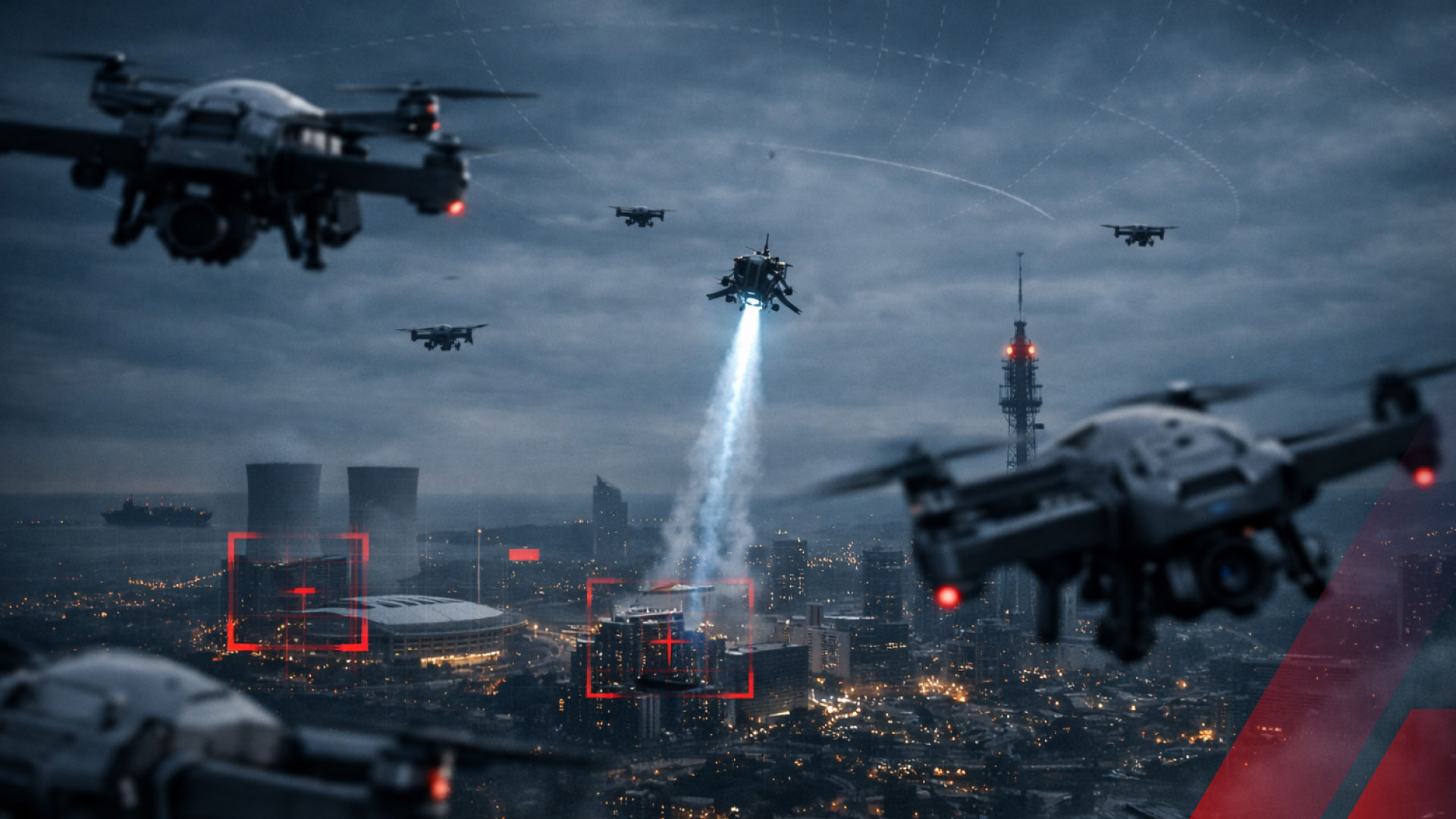
The tactical shift seen in international conflicts has direct implications for U.S. soil. Experts warn that the same saturation tactics used abroad—launching swarms of drones to overwhelm defenses—could be deployed domestically.
Drones can be smuggled across borders or launched from maritime vessels, creating a "gap" in our current security posture. While federal agencies have certain authorities, state and local law enforcement often lack the clear legal framework or technical tools to interdict these threats before they reach their targets. This makes it critical for local agencies to adopt intelligence-led platforms that can track both the drone and the pilot in real-time.
The Future: AI Warfare and Autonomous Vision
The battlefield is currently the ultimate testing ground for "Drone Vision"—AI-powered systems that allow drones to navigate and identify targets with superhuman precision. This evolution means that the threats of the future will not just be remote-controlled; they will be autonomous.
- Saturation and Swarms: Adversaries are moving toward large-scale operations designed to saturate air defenses through sheer volume.
- Precision Payloads: As we have highlighted in our Drone Detection 101 series, the use of sophisticated release hooks for narcotics and weapons is no longer a theory—it is a physical reality for correctional facilities and perimeters today.
- AI Navigation: Drones are increasingly able to navigate complex urban environments without the need for GPS, making traditional "jamming" techniques less effective.
Moving Forward: Integration as the Standard
The most significant takeaway from modern conflict is that integration is the new standard. As highlighted by Homeland Security Today, national policy must lead with integration rather than simple interception.
The future of the industry depends on Command and Control (C2) platforms like AirGuard that can:
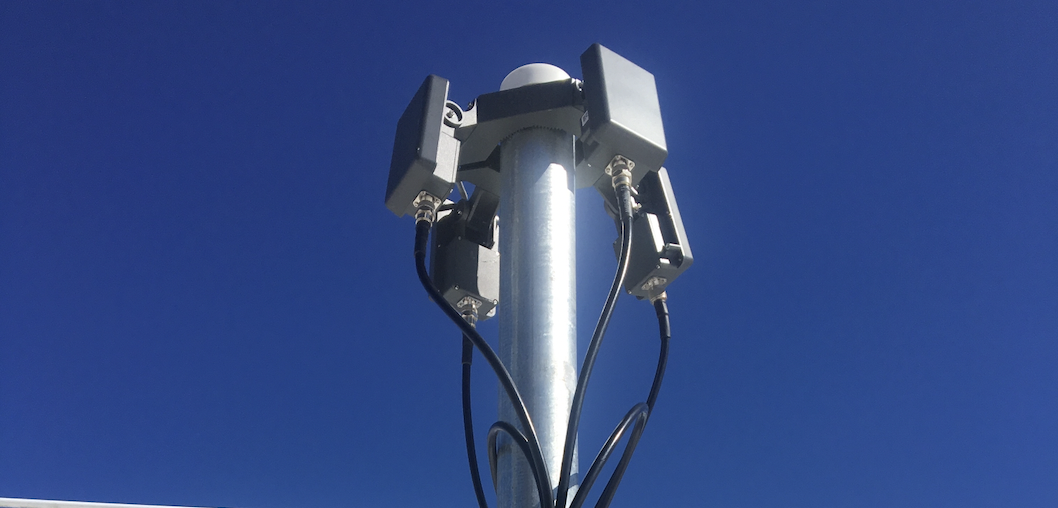
- Unify Disparate Hardware: Bringing radar, RF, and Remote ID into a single common operating picture.
- Automate Response: Using Drone as a First Responder (DFR) systems to launch "interceptor" drones within seconds of a validated threat.
- Bridge the Data Gap: Seamlessly transferring aerial data to ground-based systems to identify and track pilots via license plate recognition.
Conclusion
The war in the sky is no longer a distant concern. The "democratization" of drone technology means that the same tools reshaping the battlefield are available to those who wish to bypass our domestic perimeters. Going forward, the industry must prioritize open-architecture software and cost-effective, integrated defense layers to ensure that our security evolves as fast as the threat.
Interested in how your facility can move toward an integrated airspace defense? Contact our team today to schedule a demo.