
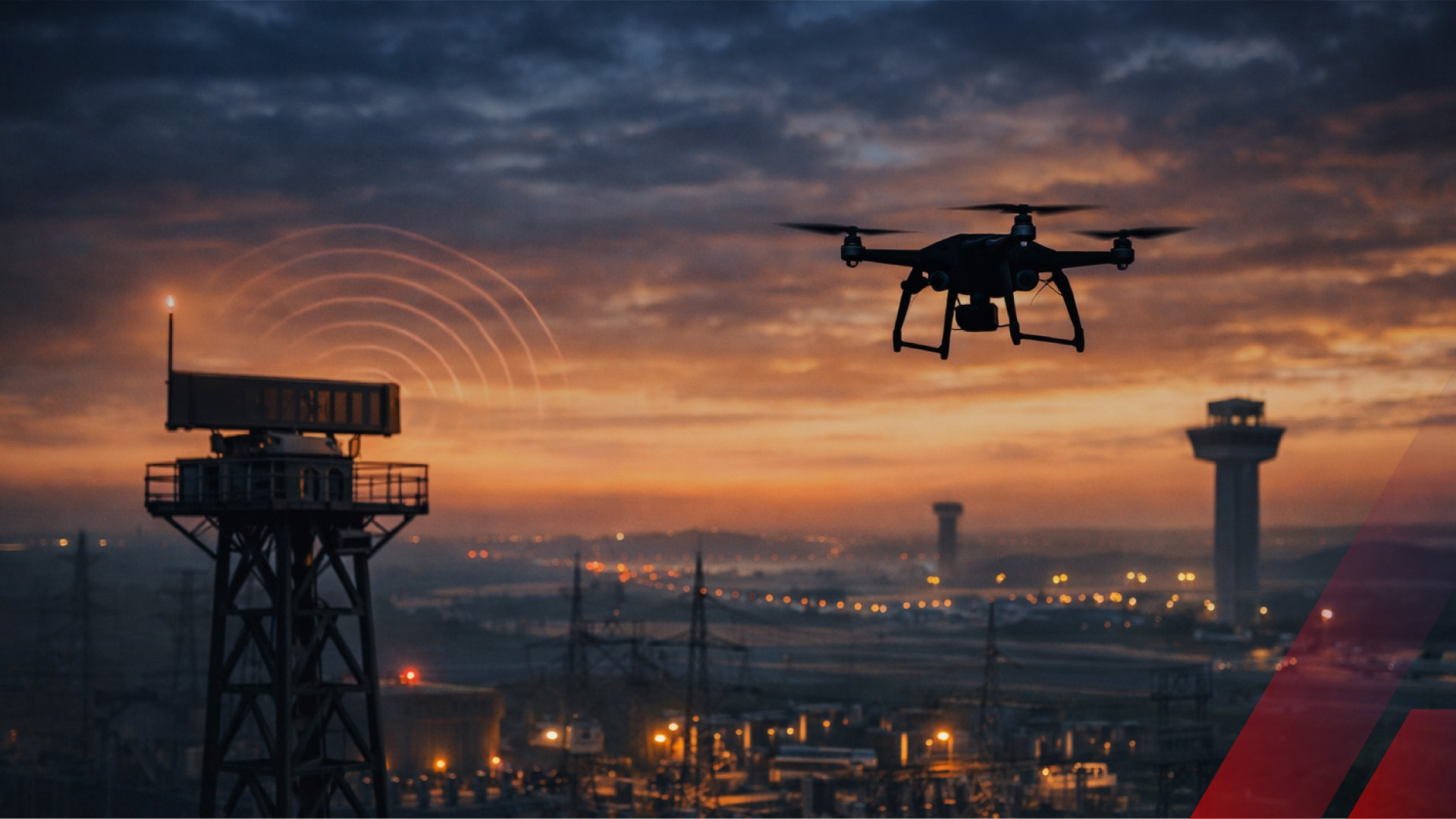
As the drone threat landscape evolves at an unprecedented pace, Airsight continues to lead the charge in protecting critical infrastructure and public spaces through advanced aerial intelligence and sensor fusion. Based on insights originally shared by Echodyne in a recent feature with Security Journal Americas (SJA), we are highlighting the shifting dynamics of drone security and why a layered, radar-centric approach is now mandatory for modern defense.
A Rapidly Shifting Threat Profile
In just four years, unauthorized drones have transitioned from an "emerging concern" to a daily operational reality. These platforms are now low-cost, highly effective, and being used continuously in global conflicts. The risk is no longer theoretical; it is increasingly impacting domestic safety:
- Military Vulnerabilities: In 2024 alone, over 350 incidents were reported across 100+ U.S. military sites.
- Aviation Disruption: Q1 2025 saw more than 400 illegal drone incidents in the U.S.. High-profile shutdowns at Munich (October 2025) and Copenhagen (September 2025) left hundreds stranded and proved that even a single drone can cause millions in operational damage.
- Corrections & Contraband: In facilities like those in Georgia, cartels are using $1,000 drones to deliver drugs and phones, compromising the safety of both staff and the incarcerated.
Why Radar is the Foundation of Defense
While many sensors exist, Airsight advocates for radar as the primary detection layer because it detects everything that moves, regardless of whether the drone is emitting a signal.
- Defeating "Dark" Drones: Sophisticated bad actors often fly non-signal-emitting drones to bypass traditional RF (Radio Frequency) sensors. Radar relies on movement and air displacement, making it the only sensor that guarantees detection of these "dark" threats.
- All-Weather Reliability: Unlike cameras that struggle with fog or darkness, radar operates effectively 24/7 in all conditions.
- Classification Accuracy: High-performance radar distinguishes drones from birds, allowing our AirGuard platform to focus on real threats rather than environmental noise.
Securing the 2026 World Cup
With the 2026 World Cup approaching, stadiums and mass gatherings are a top priority for security professionals. For the first time, state and local law enforcement will have the authority to mitigate drones near these venues. To be effective, organizations must deploy a layered system that integrates radar, RF detectors, and high-zoom cameras. This fusion allows security teams to detect a threat from kilometers away, visually confirm the target, and respond immediately to protect the public.
Strategic Guidance: Hardening Your Posture
If you are looking to strengthen your facility's security, we recommend a proactive strategy:
- Conduct a Risk Assessment: Identify if you are facing a kinetic (physical) threat or a cyber threat and determine the cascading impact of a disruption.
- Demand Integration: Do not settle for fragmented user interfaces. Ensure your detection technology integrates seamlessly with existing Video Management Systems (VMS).
- Test for the "Dark" Threat: Standard consumer drones often fail to test the true limits of your system. Work with partners who can legally fly non-signal-emitting drones to evaluate how your sensors perform against professional-grade adversaries.
Interested in enhancing your site security? Contact us for an in-depth demo.